Deepfake ID fraud has moved past novelty status and into daily operational risk for anyone running digital onboarding or account access. A single selfie match or one-shot liveness check no longer catches attackers who can generate convincing synthetic faces, voices, and documents in minutes. The only defense that holds up is a layered stack: capture-integrity checks that verify the camera feed itself, media forensics that hunt for generation artifacts, and continuous monitoring that keeps watching an identity after onboarding, backed by the reporting discipline that FinCEN now expects from financial institutions.
TL;DR:
- Layered detection, starting with capture-integrity checks, is essential because virtual camera injection can bypass traditional face-matching systems.
- Deepfake attacks often combine multiple techniques, such as synthetic identities, live video manipulation, face swaps, and document forgeries, requiring multi-modal detection strategies.
- Human review alone cannot reliably detect high-quality deepfakes, especially under time pressure, due to subtle artifacts and injection techniques that mimic real feeds.
- Implementing ongoing monitoring and independent verification channels significantly strengthens defense against post-onboarding deepfake identity takeover.
- Fraud teams should prioritize testing injection bypass rates and updating SAR procedures to include specific warnings about deepfake indicators.
Table of Contents
- How Big Is the Deepfake ID Fraud Problem Right Now?
- How Do Fraudsters Actually Build and Execute These Attacks?
- Why Do Legacy Verification Checks Keep Failing?
- What Detection Controls Actually Stop Deepfake ID Fraud?
- What Red Flags Should Trigger a SAR Filing?
- How Do You Build a Layered Defense Architecture?
- How Do You Measure Whether Your Defenses Actually Work?
- Why This Coverage Comes From Fraud Signals News
- How Do Fraudsters Manipulate Trust Alongside Deepfake Media?
- What Legal and Ethical Questions Does Deepfake Fraud Raise?
- Where Is Deepfake Technology Heading Next?
- What Fraud Teams Should Prioritize This Quarter
- Get Ongoing Deepfake Fraud Intelligence From Fraud Signals News
- Sources
- FAQ
How Big Is the Deepfake ID Fraud Problem Right Now?
The numbers are no longer theoretical. One in five biometric fraud attempts now involves a deepfake, and roughly 1 in 100 failed identity checks contains a deepfake document, image, or liveness video, according to LexisNexis Risk Solutions.
Industry analysts describe the problem using a four-category taxonomy that fraud teams should treat as a working checklist rather than academic classification:
- Synthetic identities — fabricated people built from a blend of real and invented personal data, designed to pass initial verification and build a credit history over time.
- Live video deepfakes — real-time face and voice manipulation during a video call or liveness check, often rendered through a virtual camera feed.
- Face swaps — a fraudster’s live face mapped onto a stolen or purchased identity, typically used to defeat selfie-to-ID matching.
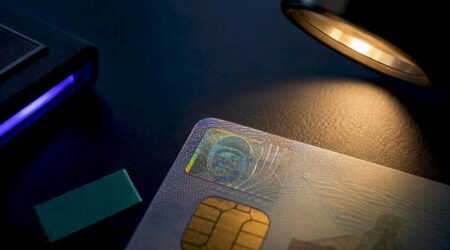
- Document deepfakes — AI-generated or digitally altered government IDs, utility bills, or bank statements that mimic security features like microtext and holograms.
Shufti’s Identity Fraud Index Report projects continued sharp growth through 2026, driven largely by the falling cost of generation tools.
The business impact runs through three main channels. Account opening fraud lets attackers establish new relationships using synthetic or stolen identities, often to build a clean transaction history before cashing out. Account takeover uses deepfake video or voice to defeat step-up authentication on existing accounts, particularly high-value ones. Money laundering benefits from synthetic identities that never trigger the sanctions or watchlist hits a real, flagged identity would. Fraud teams researching false identity bank accounts will recognize how deepfake media has simply given an old fraud pattern a much more convincing front door.
How Do Fraudsters Actually Build and Execute These Attacks?
Deepfake identity fraud rarely relies on a single trick. Attackers chain several techniques together, and understanding the sequence matters more than understanding any one technology in isolation.
- Data acquisition. Fraudsters buy or scrape breached PII, sometimes real, sometimes fabricated, to give the synthetic identity a plausible paper trail.
- Document generation. AI tools produce a matching ID, passport, or utility bill, often reproducing fine details like fonts, seals, and hologram patterns closely enough to pass a quick visual check.
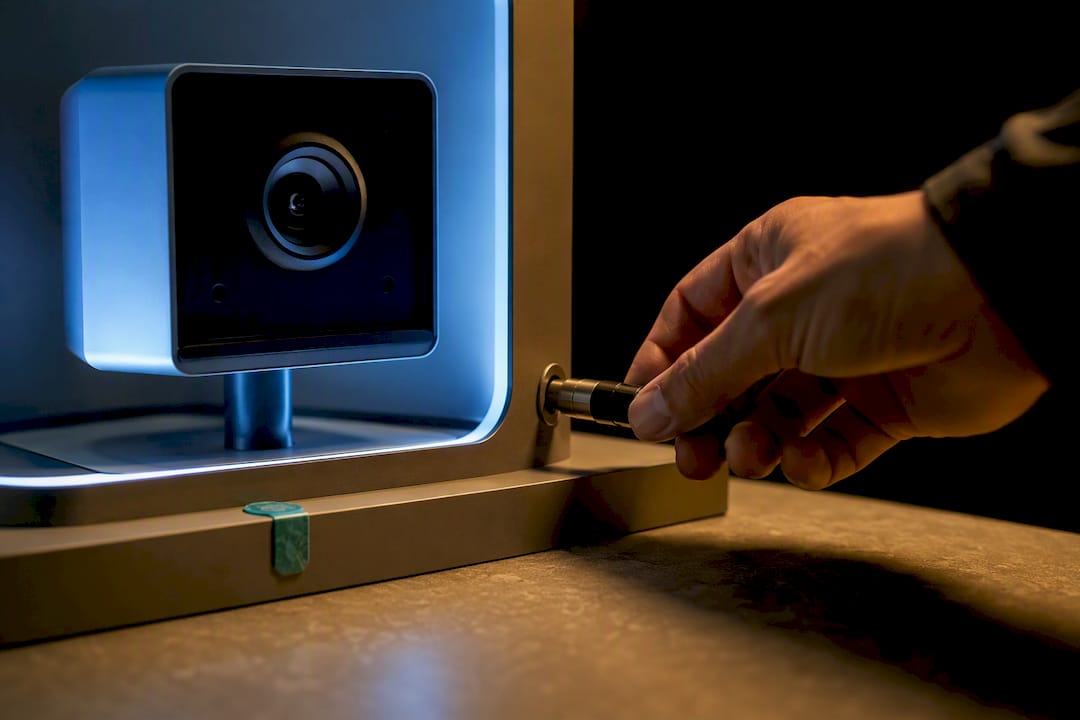
- Injection setup. Rather than filming a real face in front of a real camera, the attacker routes a pre-rendered or real-time deepfake video through a virtual camera driver, feeding it directly into the verification software as if it came from a physical device.
- Liveness defeat. The injected feed responds to blink, head-turn, or smile prompts because the deepfake model renders those movements on command, defeating active challenges that assume a human is physically present.
- Submission and monitoring evasion. The application clears initial checks and the fraudster either cashes out quickly or lets the account season to avoid velocity-based fraud flags.
Journalists covering this shift have noted that consumer-grade AI tools now put deepfake generation within reach of low-skill operators, a real change from the dark-web specialist model that dominated identity fraud five years ago. Entrust’s most recent fraud reporting confirms this shift, linking a fast-growing share of biometric bypass attempts specifically to injection attacks rather than crude photo swaps.
Three typologies recur across incident reports: a fintech onboarding flow accepting a synthetic identity that later defaulted on a credit line after six months of clean activity; a call center video verification defeated by a live-rendered face swap during a high-value wire request; and a document upload passing automated OCR checks while failing manual forensic review only after a chargeback investigation began.
Why Do Legacy Verification Checks Keep Failing?
Human reviewers are not built for this fight. Benchmark testing shows reviewers miss a high share of high-quality deepfakes when working under normal review-time pressure, according to the Fraudulent ID & Deepfake Benchmark Report, because the artifacts that betray a fake, subtle lighting inconsistencies, unnatural blink timing, edge blending around the jawline, are easy to miss at normal video speed and nearly impossible to catch in a still frame.
Single-signal liveness checks have a structural weakness: they assume the video feed reaching the verification server is the same feed coming out of a physical camera pointed at a real person. Injection attacks break that assumption entirely. When a virtual camera driver sits between the attacker’s deepfake render and the verification software, the system never sees a real camera at all. It sees exactly what the attacker wants it to see, including scripted blinks, head turns, and smiles timed to match the liveness prompt.
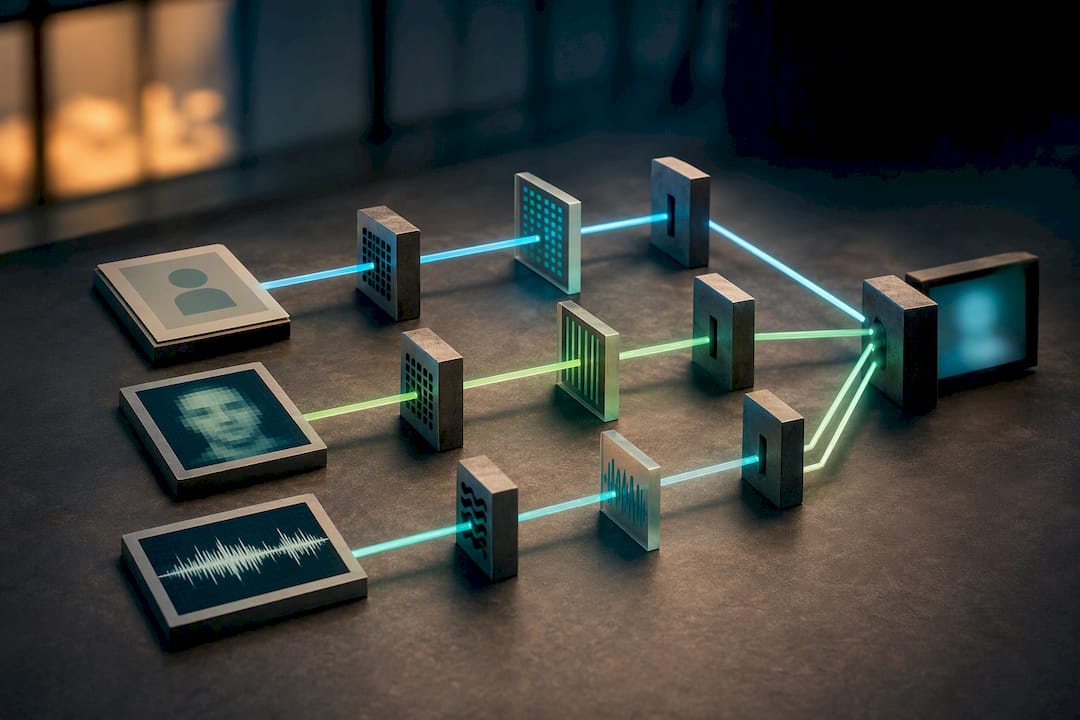
Multimodal attacks compound the problem further. Combining a face swap with a cloned voice and a document deepfake forces a defender to catch the fake across three different media types simultaneously, and most legacy stacks only inspect one or two of them. That gap is exactly where bypass rates climb.
- Human reviewers under time pressure miss a substantial share of high-quality synthetic faces.
- Passive liveness alone cannot detect a feed that never touched a physical camera.
- Active liveness challenges can be scripted and defeated by a sufficiently responsive deepfake model.
- Multimodal attacks (audio, video, and document combined) increase bypass complexity beyond what single-signal tools were designed to catch.
Pro Tip: Test your liveness vendor by piping a pre-recorded video through a virtual camera driver like OBS before you buy. If the system cannot tell the difference between that and a live device feed, no amount of AI-powered face matching downstream will save you.
What Detection Controls Actually Stop Deepfake ID Fraud?
Effective defense against deepfake ID fraud is not one product. It is a stack, and each layer catches what the layer before it misses.
Capture-integrity checks come first because they answer a question every other control assumes is already answered: is this feed actually coming from a physical camera on a physical device, right now? These checks inspect device sensor metadata, camera driver signatures, and frame-level timing to detect virtual camera injection before the image ever reaches face-matching logic. Practitioners increasingly treat feed-integrity checks as a baseline requirement rather than an optional add-on, since layered approaches that include them cut bypass risk far more than adding another face-matching algorithm on top of an already-compromised feed.
Passive and active liveness still matter, but only as one layer among several. Passive liveness analyzes a single image or short clip for texture, depth, and reflection cues without requiring user action, useful for low-friction flows. Active liveness prompts a head turn, blink, or spoken phrase, adding friction but catching static image attacks that passive checks alone might miss. Shufti’s own guidance recommends a three-layer model combining passive cues, active challenges, and forensic artifact hunting rather than leaning on any single signal.
Media forensics digs into the pixel and audio level for generation artifacts, GAN fingerprints, inconsistent lighting physics, unnatural frequency patterns in synthetic speech, that a human eye or a simple matching algorithm would never flag.
Document authentication goes beyond OCR to examine microtext, hologram reflectivity under different lighting angles, and font kerning consistency. LexisNexis has flagged the 180% year-over-year rise in fabricated documents as a direct driver of the need for this deeper forensic pass.
Continuous identity monitoring extends the defense past onboarding, tracking behavioral drift, device changes, and velocity patterns over the life of the account rather than treating identity verification as a one-time gate.
| Control layer | What it catches | Deployment friction |
|---|---|---|
| Capture-integrity / feed forensics | Virtual camera injection, pre-rendered video | Low (invisible to user) |
| Passive liveness | Static photo attacks, printed masks | Low |
| Active liveness | Basic replay attacks | Medium (user action required) |
| Media forensics | GAN artifacts, audio synthesis traces | Low (backend only) |
| Document tamper checks | Fabricated or altered IDs | Low to medium |
| Continuous monitoring | Post-onboarding takeover, behavioral drift | Low (ongoing, passive) |
Independent verification channels round out the stack. When media authenticity is genuinely in doubt, calling a customer back on a known, previously verified phone number remains one of the most reliable checks available, precisely because it does not depend on any digital signal an attacker could fake. Fraud Signals News has covered how this layered approach intersects with broader biometric fraud reduction strategies across banking specifically.
What Red Flags Should Trigger a SAR Filing?
FinCEN’s alert on deepfake-enabled fraud schemes gives fraud teams a concrete starting checklist, and it is worth treating as close to mandatory reading for any BSA officer. FinCEN’s alert, tagged FIN 2024-DEEPFAKEFRAUD for SAR filings, flags several specific red flags institutions should watch for.
- Inconsistencies between a live selfie and the photo on a submitted ID, especially around ear shape, skin texture, or lighting direction that does not match the stated capture environment.
- Use of third-party plugins, emulators, or virtual camera software detected during the verification session.
- Reverse-image search hits showing the submitted photo or document appearing elsewhere online under a different name.
- Rapid, high-velocity transaction patterns immediately following account approval, particularly moves to convert funds to crypto or route them through multiple intermediaries.
- Metadata mismatches between the device claimed and the device fingerprint actually observed.
FinCEN recommends institutions include the FIN 2024-DEEPFAKEFRAUD key term in SAR narratives when deepfake media is suspected, which helps regulators track the scale of this typology across the industry. A basic investigator triage checklist should confirm capture-integrity logs, pull document forensic scores, cross-check device fingerprint history, and flag the account for a manual review hold before any large disbursement clears. Compliance teams building out this workflow can find broader regulatory framing in Fraud Signals News’s compliance coverage.
How Do You Build a Layered Defense Architecture?
Turning this into a working system means sequencing controls so friction rises only when risk actually justifies it.
- Capture the feed with integrity checks first. Every verification session should pass through virtual-camera and device-sensor validation before any face matching happens.
- Score risk before adding friction. Use device reputation, geolocation consistency, and document forensic scores to decide whether a session needs step-up verification or can proceed on standard checks.
- Escalate ambiguous cases to independent channels. A callback to a verified number or a live video call with a trained human reviewer resolves cases automated tools flag as uncertain.
- Route flagged sessions into continuous monitoring, not just a hold queue. An account that clears manual review still needs behavioral tracking for the following weeks.
- Build a vendor evaluation checklist before signing any contract. Request injection bypass rates, false positive rates on real-world demographic diversity, and test results against known deepfake generation tools, not just marketed accuracy percentages.
Vendors like Entrust, Shufti, and DAON each publish some testing methodology detail, and fraud leaders should press every finalist for injection-specific bypass metrics rather than accepting a general liveness accuracy claim at face value. Payment-focused teams evaluating pre-transaction risk checks may also find useful patterns in crypto fraud prevention frameworks, where similar staged verification logic applies.
How Do You Measure Whether Your Defenses Actually Work?
Effectiveness comes down to four core metrics: bypass rate (how often a known attack technique defeats the system), false positive rate (how often legitimate users get wrongly blocked), time-to-detect (how long a compromised identity survives before flagging), and lifecycle signal coverage (what percentage of the identity lifecycle, onboarding through account closure, actually gets monitored).
Red-team exercises should emulate real attacker toolchains: virtual-camera injection, off-the-shelf deepfake-as-a-service outputs, and combined audio-video-document attacks tested end-to-end rather than checked one signal at a time. Testing tools that generate synthetic voice, like consumer audio cloning platforms, give red teams a realistic proxy for the audio layer attackers now use in combined attacks. Review these metrics monthly with fraud ops, quarterly with executive risk committees, and immediately after any material bypass incident.
Why This Coverage Comes From Fraud Signals News
Fraud Signals News tracks biometric identification, liveness detection, and deepfake ID technology as a dedicated beat, not a side note to general fraud reporting. This piece draws on FinCEN’s regulatory guidance alongside benchmark data from LexisNexis, Shufti, and Entrust to keep the analysis grounded in what vendors and regulators are actually observing in 2026. Readers tracking this space further can follow ongoing coverage in the deepfakes category for case updates as new typologies emerge.
How Do Fraudsters Manipulate Trust Alongside Deepfake Media?
Deepfake ID fraud rarely works on technology alone. It succeeds because attackers pair synthetic media with pressure tactics that push victims and reviewers past their normal skepticism.
A common pattern involves urgency framing: a “customer” on a video verification call claims a wire needs to clear before a deadline, pushing a human reviewer to skip a callback verification step they would normally insist on. Authority impersonation follows a similar logic, deepfake voice cloning of an executive or family member instructing an urgent transfer relies entirely on the listener’s trust in a familiar voice overriding their instinct to double-check.
Attackers also exploit reviewer fatigue directly. Fraud teams processing hundreds of verification sessions a day develop pattern-matching shortcuts, and a well-made deepfake is specifically designed to satisfy those shortcuts rather than survive careful scrutiny. Social engineering scripts increasingly reference real details pulled from breached data, making the synthetic identity’s backstory feel consistent enough that a reviewer’s gut check passes even when the underlying media would fail forensic analysis.
The defense against this layer is procedural, not technical. Independent verification channels, calling a number already on file rather than one the “customer” just provided, break the psychological pressure loop because they remove the attacker’s ability to control the second channel. Training reviewers to treat urgency itself as a red flag, rather than a reason to move faster, closes a gap no algorithm can fully patch.
What Legal and Ethical Questions Does Deepfake Fraud Raise?
Deepfake ID fraud sits at an uncomfortable legal intersection: the underlying acts, identity theft, wire fraud, document forgery, are well established crimes, but the deepfake technology itself is not uniformly illegal to create or possess in the United States. Liability generally attaches to the fraudulent use of synthetic media rather than the generation technology, which means prosecutors build cases around intent and outcome rather than the tool itself.
That gap creates real friction for compliance teams. A financial institution that detects a deepfake during onboarding faces a judgment call: file a SAR under the FIN 2024-DEEPFAKEFRAUD guidance, decline the application, and potentially alert law enforcement, or treat it as a routine denial without escalation. FinCEN’s guidance pushes firmly toward the former, but the operational cost of consistent escalation is real and uneven across smaller institutions with thinner compliance staffing.
Ethical considerations extend to detection itself. Media forensics tools that analyze biometric data raise their own privacy questions, particularly around data retention and cross-institution sharing of flagged identity artifacts. Institutions need clear retention policies for rejected verification attempts, since storing a fraudster’s deepfake attempt indefinitely carries different risk than storing a legitimate customer’s biometric enrollment. Consent frameworks built for ordinary biometric verification were not designed with adversarial media in mind, and firms leaning on the broader compliance requirements that already govern biometric collection will need to extend those policies explicitly to cover forensic evidence handling.
Where Is Deepfake Technology Heading Next?
Generation quality keeps closing the gap with detection capability, and that race shows no sign of slowing through the rest of 2026. Real-time deepfake rendering, once limited to pre-recorded video, now runs at speeds that support live video calls with minimal lag, which is precisely what makes injection attacks against video-based verification so effective.
On the detection side, capture-integrity checks are becoming standard rather than premium, largely because injection attacks have proven that face-matching accuracy alone is meaningless if the input feed itself is fabricated. Expect vendors to publish injection-specific bypass metrics more consistently as buyers demand them in procurement processes.
Multimodal detection is the next frontier worth watching closely. As attackers combine cloned voice, synthetic video, and forged documents into single coordinated attempts, detection systems are moving toward correlating signals across all three media types simultaneously rather than scoring each in isolation. A document that forensically checks out but arrives alongside a voice sample with synthetic audio artifacts should trigger a hold even if neither signal alone crosses a threshold.
Regulatory pressure will likely tighten as well. FinCEN’s typology-focused alert reads like an early step rather than a final framework, and fraud leaders should expect more granular reporting requirements as deepfake-tagged SARs accumulate enough volume to shape future guidance.
What Fraud Teams Should Prioritize This Quarter
Capture-integrity has to come first. Everything downstream, media forensics, liveness scoring, document checks, is compromised if the input feed itself is fake, so fixing that gap earns the fastest return on effort. Run a vendor bake-off that tests injection bypass rates specifically, not general accuracy claims, then schedule a red-team exercise using virtual-camera piping before quarter’s end. Update SAR templates to reference FIN 2024-DEEPFAKEFRAUD now, before the next incident forces a scramble.
— Carlos Ochoa
Get Ongoing Deepfake Fraud Intelligence From Fraud Signals News
Vendor benchmark reports and regulatory alerts move faster than most fraud teams can track alongside their day jobs, which is exactly the gap Fraud Signals News exists to close. Unlike a single vendor’s marketing page or a one-off industry report, Fraud Signals News delivers ongoing, vendor-neutral reporting on biometric verification, liveness detection, and deepfake fraud typologies as they emerge, not once a year, but as new incidents and benchmark data come in.

The deepfakes category tracks new case typologies and detection benchmarks as they’re published, and the broader authentication coverage breaks down which layered defenses hold up against real adversarial testing. Visit Fraudsignals to sign up for updates and keep your fraud team’s threat model current as generation tools and detection methods both keep moving.
This article is general information, not a substitute for advice from a qualified financial advisor. Consult a qualified financial professional about your own circumstances before acting on anything here.
Sources
- FinCEN issues alert: Fraud schemes involving deepfake media targeting financial institutions
- One in every 100 identity check failures involves a deepfake document, image or liveness video
- Deepfake-Powered Identity Fraud Is Surging in 2026: Shufti’s Identity Fraud Index Report Reveals
- Deepfakes, Social Engineering, and Injection Attacks on the Rise: Entrust 2026 Identity Fraud Report Reveals Surging Attacks and Diversifying Tactics
FAQ
What Happens if You Get Caught Using a Fake ID?
Consequences scale with intent and outcome. Using a fake ID for underage purchases typically carries misdemeanor charges, while using a deepfake or synthetic identity to defraud a financial institution can trigger federal wire fraud and identity theft charges with far more severe penalties.
Are Deepfakes Actually Illegal?
Creating a deepfake is not uniformly illegal in the United States. Using one to commit fraud, impersonate someone for financial gain, or defeat identity verification systems is illegal under existing fraud and identity theft statutes, since liability attaches to the fraudulent act rather than the technology itself.
What Is the Most Common Type of Identity Fraud Right Now?
Synthetic identity fraud, building a fabricated identity from a mix of real and invented data, remains one of the most common patterns, and deepfake media now serves as the “proof layer” that makes those synthetic identities convincing enough to clear onboarding checks.
Can You Sue Someone for Creating a Deepfake of You?
Victims can generally pursue civil claims for defamation, fraud, or right-of-publicity violations depending on how the deepfake was used, though the applicable legal path varies significantly by state and by whether the deepfake caused direct financial harm.
How Do You Detect Deepfake Fraud Before It Causes Losses?
The most effective approach combines capture-integrity checks that catch virtual camera injection, media forensics that flag generation artifacts, and continuous monitoring that watches for behavioral drift after onboarding, rather than relying on any single liveness or selfie-match check.
Recommended

Detect SIM Swap Fraud Before Takeover: 3 Real Time Signals for Fraud Teams

21 Day Pilot: Layer Behavioral and Physical Biometrics for Fraud Teams