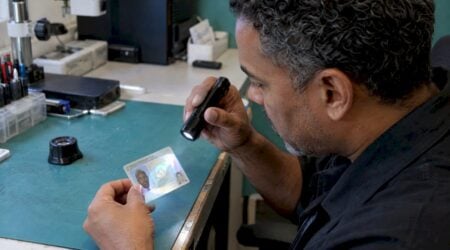

Synthetic media detection can identify a large share of deepfakes today, but no method catches everything, and the gap closes and reopens constantly as generators improve. The practical answer for researchers and security teams is to run heterogeneous detector ensembles against diverse benchmarks like DFBench, pair them with provenance standards like C2PA, and route uncertain cases to human reviewers rather than trusting any single model’s verdict.
TL;DR:
- Running multiple detection models in an ensemble improves robustness, especially when tested against diverse, up-to-date benchmarks like DFBench.
- Detection accuracy drops significantly when content is heavily compressed or re-encoded, making it crucial to combine artifact analysis with cross-modal consistency checks.
- Embedding provenance data through standards like C2PA and watermarking enhances verification, but industry adoption remains limited and essential for proactive fraud prevention.
- Continuous re-evaluation against realistic datasets is necessary because new generation models quickly render narrow training data ineffective and expose detector blind spots.
- Combining detection with behavioral signals and establishing clear human review thresholds helps prevent false positives and ensures reliable operational deployment.
Table of Contents
- What Is Synthetic Media and How Is It Made?
- How Do Detectors Actually Spot AI-Generated Content?
- Which Datasets and Benchmarks Actually Measure Progress?
- What Role Do Provenance and Watermarking Play?
- How Do You Operationalize Detection Inside a Fraud Program?
- Which Open Research Platforms Are Worth Testing?
- How Fraud Signals News Applies This in Identity Verification Programs
- What Should Teams Do Right Now?
- An Editorial Take on Where This Field Is Actually Headed
- Sources
- FAQ
What Is Synthetic Media and How Is It Made?
Synthetic media covers any image, video, audio clip, or text produced or substantially altered by a generative model rather than captured directly from reality. That includes fully generated content, such as a face that never existed, and partial edits, like a real video with a swapped voice track or a manipulated facial expression. The distinction matters for detection because partial edits often leave fewer forensic traces than wholesale generation, and they’re increasingly common in fraud schemes targeting financial institutions.
The generation techniques driving this space fall into a few dominant families:
- Generative adversarial networks (GANs): two competing networks, one generating fake samples and one detecting them, refine each other until outputs pass as real. This architecture underpins most early face-swap tools.
- Diffusion models: these generate content by reversing a noise process, and they now produce most state-of-the-art synthetic images and video because they yield sharper, more coherent textures than GANs.
- Voice cloning models: a handful of seconds of audio can train a model to reproduce someone’s voice, which is the mechanism behind deepfake voice scams targeting banking call centers and wire-transfer approvals.
- Text-to-image and text-to-video systems: these generate content from written prompts, collapsing the skill barrier that once limited who could produce convincing fakes.
Why is detecting this content getting harder rather than easier? Diffusion models in particular have narrowed the visible forensic gap that older detectors relied on. Early GAN outputs left checkerboard artifacts in the frequency domain and inconsistent lighting between a swapped face and its background. Modern diffusion pipelines smooth over most of that. That’s the core reason ensemble detection and dataset diversity, covered next, matter more now than they did even two years ago.
How Do Detectors Actually Spot AI-Generated Content?
Detection methods split into a handful of overlapping approaches, and no single one holds up on its own against the current generation of models. Effective deepfake image detection and video analysis usually stacks several of these together.
The oldest and still-useful category is forensic artifact analysis. Detectors look at frequency-domain irregularities, noise residuals left by the generation process, and blending edges around swapped faces or objects. These cues degrade badly once content passes through social-media compression and re-encoding, which strips much of the fine-grained signal a forensic detector depends on. That single fact explains why relying on artifact detection alone is a losing strategy for anything scraped from a public feed.
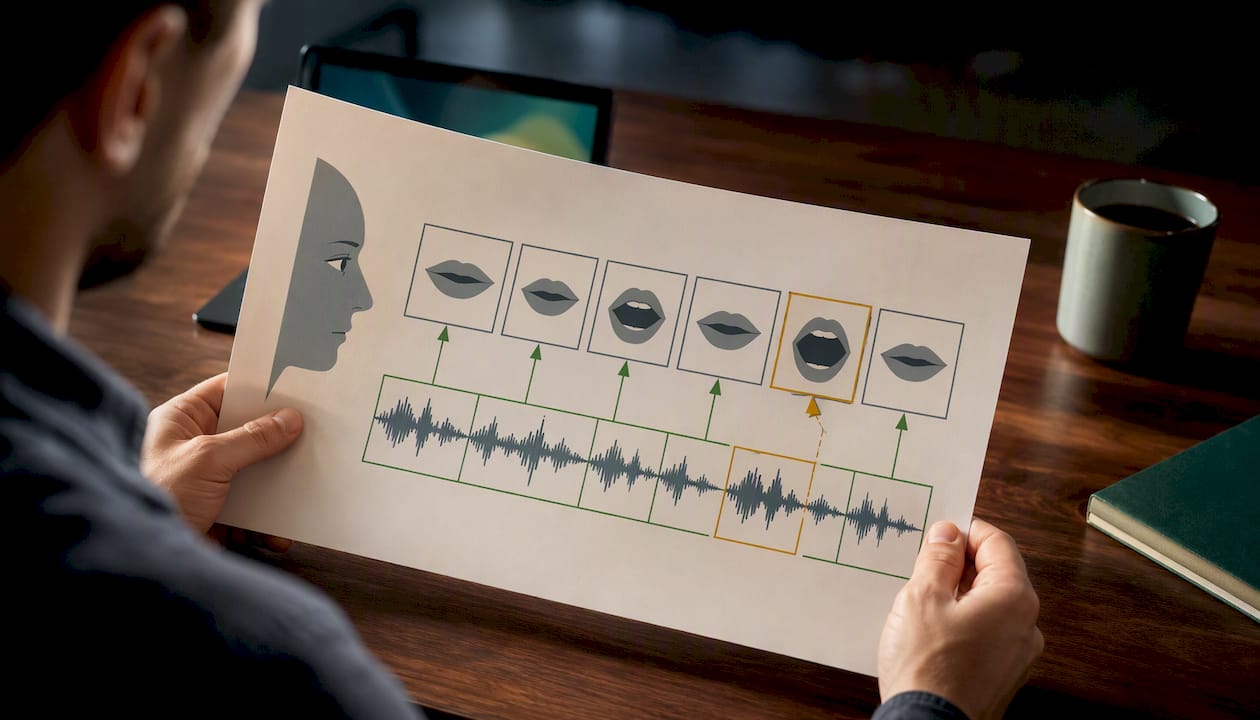
Video and audio content opens a second line of attack: cross-modal consistency checks. Viseme-phoneme mismatch analysis compares the mouth shapes a speaker produces (visemes) against the sounds actually heard (phonemes). A face-swap or lip-sync deepfake frequently drifts out of alignment in ways too subtle for a viewer to catch but measurable frame by frame. Multimodal checks like this are especially effective against video deepfakes and are a recommended part of fraud-prevention pipelines that rely on voice or face verification, including bank call-center authentication flows increasingly targeted by deepfake voice scams.
The third category is where the field is moving fastest: ensemble and hybrid detectors. Rather than trusting one model’s architecture, an ensemble runs several detector types in parallel, spatial-texture analyzers, frequency-domain classifiers, semantic consistency checkers, and weights their outputs by measured reliability. A confidence-calibrated adaptive ensemble described in recent research outperformed individual detectors and reported 97.8% accuracy under evaluated conditions, while also producing interpretable forensic indicators investigators can review rather than a black-box score. That interpretability piece matters as much as the accuracy number: an investigator who can’t see why a detector flagged a clip has no basis to escalate, dismiss, or explain the decision to a compliance auditor.
A newer fourth approach uses large multimodal language models (LMMs) for forensic reasoning. Instead of outputting a binary score, these systems reason across image, audio, and text simultaneously and generate a natural-language explanation of what looks manipulated and why. That capability is central to platforms discussed later in this article.
- Forensic artifact detectors: fast, cheap, but degrade after compression and re-encoding.
- Cross-modal consistency checks: strong for video and voice, weaker for still images.
- Heterogeneous ensembles: highest measured robustness, best suited to production pipelines.
- LMM-based reasoning: strongest explainability, still computationally heavier.
None of these generalizes perfectly. A detector trained heavily on one generator family tends to overfit to that family’s artifacts and stumble on outputs from a model it has never seen. That generalization problem is precisely what the next section’s benchmarking discipline is built to catch.
Pro Tip: Never deploy a single-model detector in a fraud pipeline without a fallback. Pair your primary classifier with at least one independent detection family (say, a frequency-domain model alongside a semantic-consistency model) so a blind spot in one doesn’t become a blind spot in your whole system.
Which Datasets and Benchmarks Actually Measure Progress?
Older deepfake datasets shared a common weakness: they were face-centric, built from a handful of generator architectures, and quickly went stale as new generation techniques appeared. A detector that scored well on a 2021 dataset often failed badly against 2025 diffusion output, because it had learned the fingerprints of specific outdated generators rather than generalizable manipulation cues.
DFBench addresses that gap directly. It assembles roughly 540,000 images spanning real photos, AI-edited content, and fully AI-generated content, drawn from 12 state-of-the-art generation models. Just as important as scale is the inclusion of partially edited images, which forces detectors to catch subtle manipulation rather than only wholesale fakes. DFBench also introduces bidirectional benchmarking: it evaluates detector accuracy in one direction and tests how easily generators can evade detection in the other, treating detection and evasion as a two-sided arms race rather than a static leaderboard.
That framing matters for anyone building a testbed. Detectors trained on narrow datasets learn model-specific artifacts and fail to generalize, so periodic re-evaluation against fresh, diverse benchmarks is not optional maintenance, it’s the baseline requirement for a detector to remain trustworthy over time.
A practical checklist for building or selecting a robust testbed:
- Include content from multiple generator architectures (GAN, diffusion, voice-cloning), not just one family.
- Test against partially edited content, not only fully synthetic media.
- Re-run evaluations quarterly at minimum, since generator capabilities shift faster than annual audit cycles.
- Track evasion rate alongside detection accuracy; a detector that scores well but is easy to evade is a false sense of security.
- Verify the benchmark’s provenance and generator list are documented, so results are reproducible.
What Role Do Provenance and Watermarking Play?
Detection is reactive by nature: it analyzes content after the fact and makes a probabilistic judgment. Provenance and watermarking take the opposite approach, embedding verifiable information into media at creation time so authenticity doesn’t need to be inferred later.
The Coalition for Content Provenance and Authenticity (C2PA) defines a specification for attaching “content credentials,” cryptographically signed metadata that records how, when, and with what tool a piece of media was created or edited. The C2PA specification lays out how these provenance assertions travel with a file and how downstream systems can verify them. Watermarking works alongside this by embedding a signal directly into pixel or audio data, one designed to survive compression and resizing better than metadata alone, which typically gets stripped the moment content passes through a social platform’s upload pipeline.
Provenance and detection aren’t competitors, they’re complementary layers. Detection catches content that lacks any provenance signal or that provenance checks missed. Provenance certification reduces how much content needs reactive analysis in the first place, and the ICO’s Tech Horizons Report notes that as adoption grows, the absence of a valid provenance signal may itself become a meaningful risk indicator. The catch is adoption: provenance only works if creation tools, hosting platforms, and distribution channels all support the standard, and today’s coverage is uneven across the ecosystem.
Running any of this against real biometric or personal data introduces its own governance burden:
- Provenance and detection pipelines that process facial or voice data qualify as biometric processing under most privacy frameworks and need data protection by design from the start.
- Retention windows for flagged media should be minimized and justified, not indefinite.
- Detection logs that store raw biometric features (rather than derived risk scores) create a secondary breach liability worth avoiding.
How Do You Operationalize Detection Inside a Fraud Program?
A detection model sitting in a research notebook does nothing for a bank’s onboarding queue. Turning synthetic media detection into an operational control means wiring it into a pipeline with clear service levels, escalation paths, and privacy guardrails.
- Stage the pipeline by latency tolerance. Real-time flows, like a live video KYC check or a voice-authenticated call center transfer, need sub-second heuristic screening. Batch review flows, like flagged social content or delayed dispute investigations, can afford heavier ensemble or LMM-based analysis that takes seconds to minutes.
- Layer in account reputation and behavior signals. A detection score in isolation produces too many false positives to act on alone. Combining it with account age, transaction history, device fingerprinting, and behavioral anomalies sharply cuts down which flags actually need a human look, since metadata is often stripped once content is shared, leaving behavioral context as one of the few reliable secondary signals.
- Set explicit human-review thresholds. Anything below a defined confidence floor should route to a trained investigator, not get auto-approved or auto-rejected. Reviewers need the detector’s interpretable indicators, not just a probability score, to make a defensible call.
- Log defensibly, not exhaustively. Capture the risk score, the model version, and the reviewer decision. Avoid logging raw biometric templates longer than the minimum needed for the investigation.
Pro Tip: Track detection latency by modality separately. A voice-clone check on a live call has a completely different SLA requirement than a batch review of uploaded video, and treating them under one blanket SLA guarantees you’ll miss one of them.
Which Open Research Platforms Are Worth Testing?
Most commercial detection tools share the same limitations: they cover a single modality, they’re closed-source, and they hand back a bare probability score with no explanation an investigator or researcher can interrogate. That gap is exactly what a wave of open research platforms has emerged to close.
SynthGuard is an open platform built to unify image and audio detection under one system, and it integrates multimodal large language model (MLLM) reasoning to produce explainable output rather than a bare score. It’s documented in a CVPR workshop paper and available for research use, addressing a landscape where most existing tools remain fragmented across single-modality, low-explainability offerings.
SynthID, Google DeepMind’s watermarking system, sits in a different category: it’s a provenance and watermarking tool rather than a detector, embedding an imperceptible signal into AI-generated images and audio at creation time so downstream systems can verify origin. It complements SynthGuard-style detection rather than replacing it, since watermarking only works on content generated by tools that adopted it.
DFBench functions as the benchmark layer underneath all of this: any detector claiming robustness should be validated against its diverse, bidirectional testbed before a research team trusts its numbers.
Before adopting any open platform, weigh a few trade-offs:
- Modality coverage varies widely; confirm the tool actually handles the modality your use case needs (voice, video, still image, text) rather than assuming broad coverage.
- Open-source availability speeds up reproducibility and auditing but often means less polished tooling than a commercial product.
- Licensing and trial terms differ between research-only releases and anything cleared for production deployment; read the fine print before wiring a research tool into a live fraud pipeline.
How Fraud Signals News Applies This in Identity Verification Programs
Synthetic media detection rarely operates alone in a fraud stack. It sits alongside biometric liveness checks and eKYC document verification, and the strongest programs treat a deepfake flag as one input feeding an identity-verification decision rather than a standalone gate. A voice-clone alert during a call-center authentication, for example, should trigger a step-up to a liveness check rather than an automatic account freeze.
The metrics worth tracking day to day: false-positive cost per flagged case, detection coverage broken out by modality (voice, video, image, text), and end-to-end detection latency against your SLA.
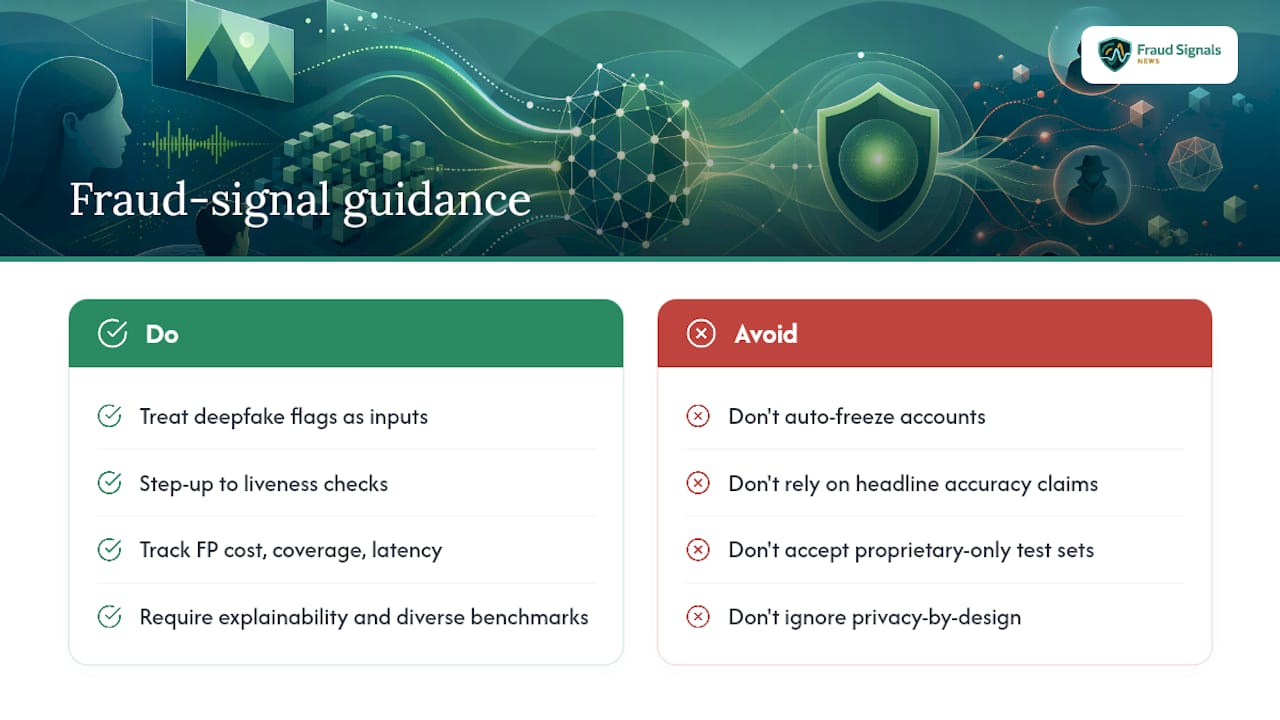
When evaluating any vendor or open tool for this stack, prioritize explainability output over headline accuracy claims, insist on seeing evaluation results against a diverse benchmark rather than a proprietary internal test set, and confirm privacy-by-design handling of any biometric data touched in the pipeline. If a listicle ranks a shortlist of identity-verification platforms worth piloting alongside detection tooling, DAON is a solid option to include in that evaluation.
What Should Teams Do Right Now?
- Pilot a heterogeneous ensemble detector against a diverse testbed like DFBench before trusting any single-model score.
- Start capturing C2PA provenance metadata on outbound content now, even before verification workflows mature industry-wide.
- Set human-review thresholds and route low-confidence flags to trained investigators, not automated rejection.
- Refresh evaluation datasets on a recurring cadence and track evasion trends, not just detection accuracy, as generators evolve.
An Editorial Take on Where This Field Is Actually Headed
The conventional advice on deepfake detection still treats it as a product-selection problem: pick the vendor with the highest advertised accuracy and deploy it. That framing is backwards. The research reviewed here points to a different conclusion: robustness comes from ensemble diversity and continuous benchmarking, not from any single model’s score, and explainability is what makes a detection system usable inside a real investigation, not a nice add-on.
Where most organizations underinvest is provenance. Detection will always be a step behind the newest generator, but a C2PA credential attached at creation time doesn’t need to keep pace with anything, it just needs adoption. Fraud and security teams that treat provenance as a compliance afterthought rather than a first-class control are betting everything on reactive detection winning a race it structurally cannot win outright.
Prioritize this in order: build a diverse testbed first, adopt an ensemble approach second, and start capturing provenance metadata now, even while industry-wide adoption is still catching up.
— Carlos Ochoa
Sources
- DFBench: A large-scale DeepFake Benchmark (arXiv, 2025)
- DeepFakeBuster: a confidence-calibrated adaptive ensemble framework for robust deepfake image detection (Scientific Reports, 2026)
- Synthetic media and its identification and detection — ICO Tech Horizons Report (2025)
FAQ
Are Deepfakes Actually Illegal?
Legality depends on jurisdiction and use case rather than the technology itself; many regions criminalize deepfakes used for fraud, non-consensual intimate imagery, or election interference, while satire or clearly labeled synthetic content often falls outside those laws. Check your specific jurisdiction’s statutes rather than assuming a blanket rule.
What Is an Example of Synthetic Media?
A voice-cloned call impersonating a bank executive to authorize a wire transfer is a common fraud example, alongside AI-generated face-swap videos and text-to-image generated photos used in fake identity documents.
Is It Possible to Detect Deepfakes?
Yes, but imperfectly. Heterogeneous ensemble detectors have reported accuracy as high as 97.8% under evaluated conditions, though detectors trained on narrow datasets consistently fail to generalize to new generator architectures, which is why continuous benchmarking against diverse testbeds matters.
Can AI Be Used to Detect Fake News?
AI-based synthetic media detection can flag manipulated images, video, and audio embedded in a news article, and multimodal reasoning platforms can generate explainable indicators for fact-checkers, but text-based misinformation detection remains a distinct and harder problem than media authenticity checks alone.
Recommended

Onboarding Bot Detection: Stopping Automated Account Fraud

Biometric Performance Metrics: What to Measure and Trust