Navigating the Complexities of Digital Identity.
The digital world moves fast, but the methods used to exploit it move faster. At Fraud Signals News, we believe that transparency and independent reporting are the best defenses against a landscape of increasing digital deception. We were founded on a simple premise: to illuminate the signals that matter. As an independent publication, we provide an unbiased look at the technologies shaping digital trust today. Whether it’s a shift in regulatory compliance or a breakthrough in authentication tech, we bring you the stories that impact how we live and work online. Join our community of experts and innovators as we navigate the future of security, one signal at a time.
- Show All
- AI & Fraud
- Authentication
- Banking & Fintech
- Biometrics
- Compliance
- Consumer Fraud
- Deepfakes
- ekyc
- Healthcare
- Identity Fraud
- identity verification
- Industries
- Research
- Travel
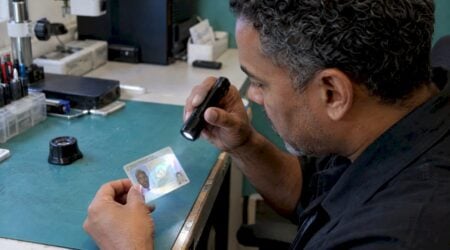
ID Security Features: What Each One Does and How to Check It
A practical guide to ID security features: holograms, laser engraving, polycarbonate, barcodes and mobile IDs, and how fraud teams should...
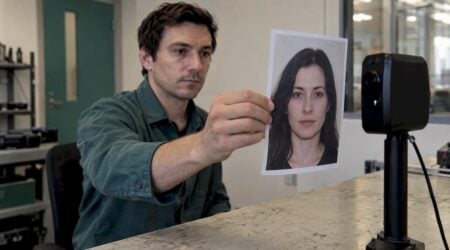
Face Liveness Detection: How It Works and Where It Fails
How face liveness detection works, passive versus active checks, why injection attacks defeat camera-only analysis, and how to test and...
FRVT Results Analysis: How to Read NIST Face Test Data
How to read NIST FRVT and FRTE results: FNMR, FMR, demographic differentials, version matching and liveness limits, for fraud teams...
Identity Orchestration Platforms: A Buyer’s Guide for Fraud Teams
How identity orchestration platforms work, where they fail, and how fraud leaders should evaluate them against NIST 800-63-4, liveness and...
EU AML Reform 2027: What the Single Rulebook Means for Customer Onboarding and Fraud Prevention
Europe is about to rewrite the rules of financial crime compliance. The EU AML reform, built around a new Anti-Money...Eye Tracking Authentication: Where It Holds Up and Where It Fails
Eye tracking authentication explained for fraud and identity leaders: how gaze biometrics work, why variability limits them, and how liveness...
Travel Document Verification: Catch Visa Errors Before Boarding
Check passport validity, visas, and flight details with your airline or Timatic before departure. Confirm official entry rules to avoid...
NIST SP 800-63A: Three Identity Proofing Steps Fraud Teams Can’t Skip
Learn how NIST SP 800-63A defines IAL2, from identity evidence and supervised remote checks to subscriber records, privacy duties, and...
Privacy Preserving Biometrics: 2023–2025 Research for Your First Pilot
Compare biometric privacy methods, tradeoffs, and standards, then use 2023–2025 research and practitioner checks to choose an approach for your...
Iris Liveness Detection for Engineers: LivDet Tests Open Set Gaps
See how LivDet testing exposes open set weaknesses in iris liveness detection, then apply standards aligned metrics, attack testing, and...
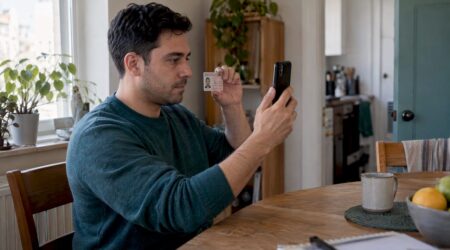
Read an ePassport’s NFC Chip: A Scan Can’t Prove Who Holds It
Learn how to read an ePassport with your phone, what its chip stores, and how chip checks support fraud screening...
Meet NIST 0.1 DFAR/DFRR with MRZ Verification for Compliance Teams
Compliance teams: MRZ verification that ties ICAO 9303 parsing, composite checksums and OCR fixes to NIST SP 800-63A and an...
Face Morphing Detection for Security Teams: NIST Aligned Checklist
Research led operational guidance for security teams and developers. Deploy a prevention first pipeline, set MACER and BSCER thresholds, and...
Pass Examiners: 4 Red Flags Rule Program Controls Regulators Want
U.S. playbook for compliance officers: build a Red Flags Rule Program examiners accept. Map four elements, log red flags, and...
Build a Three Stage Voice Cloning Detection Program for Security Teams
Practical playbook to test and deploy voice cloning detection. Maps FTC's three stage model into real-world tests, thresholds, and escalation.
NIST/ISO Tests and Capture Quality Drive FAR vs FRR for Fraud Teams
How NIST and ISO test types plus capture quality, not algorithms, shape FAR vs FRR. Checklists and monitoring for fraud...
Match Standards to Ops: KYB Verification Methods Fraud Teams Need Now
A standards-and-ops approach to KYB verification for fraud teams. Learn how to align PAD, device attestation, provenance, and human review...
Stop Replay and Injection Fraud: NIST Aligned Liveness for Fraud Teams
Practical, standards aligned guidance for fraud teams to deploy document liveness: map NIST and ISO tests to real attack corpora,...
Fraud Teams: NIST Aligned VPN Detection for Onboarding, Score First
A NIST aligned playbook for fraud teams to score VPN and proxy risk at onboarding, validate detection with red‑team tests,...
Prevent a Biometric Breach: 6 Operational Controls for Identity Teams
Operational checklist for engineering and compliance: 6 controls mapped to NIST and FTC, with vendor clauses, PAD, and template protection.
Liveness Detection Spoofing: Standards Aligned Defenses for Engineers
Standards aligned guide for engineers explaining why PAD alone fails against injection and deepfake attacks, and which controls to deploy...
Report Operating Points, Not AUC: ROC Curve for Biometrics Teams
Explain why AUC misleads biometric deployments and what to report instead. Learn operating point ROC reporting, bootstrap confidence intervals, DET...
Healthcare Identity Verification for Implementers: Fix EMPI in 3 Steps
Standards aligned, operations first steps to apply NIST, ONC, and HL7 guidance. Fix EMPI at intake, map IAL tiers, and...
Before April 1, 2026, Fintechs Must Layer Open Banking ID Verification
Operational guidance for fintech executives: how open banking ID checks work, what CFPB and CIP require, and how to layer...About / Fraud Signals
Fraud is an industry. So is stopping it.
Fraud Signals is a Boston-based news and analysis publication covering fraud, deepfakes, identity protection, and the companies building the technology behind all three.
Why we exist
Fraud is getting faster, cheaper, and harder to see.
Fraud Signals makes it make sense.
From Boston, we report on the schemes and deepfakes, the identity and fintech companies building defenses, and the research shaping where this goes next. It's written for two audiences that rarely share a page: the researchers and operators who track this industry closely, and the fintech, travel, and data-service users who live with the risk.
Coverage
Three fronts, one story.
The schemes
How modern fraud and synthetic media actually work, who they target, and how quickly the playbook is changing — explained without the fear-marketing.
The defenses
The verification, identity-protection, and fintech-security tools built to stop fraud, and an honest read on how well they hold up in the real world.
The market
The companies, funding, research, and policy shaping fraud prevention — tracked with a reporter's skepticism rather than a vendor's press release.
Staff / Contributor
Fraud, Identity & Industry
Carlos Ochoa
Carlos Ochoa covers the business and technology of fraud for Fraud Signals — the schemes and deepfakes reshaping how criminals operate, and the identity, verification, and fintech-security companies racing to shut them down.
He came to the beat through years of business and consumer reporting, work that taught him to read a company's claims as carefully as its balance sheet. That skepticism carries over. In a field crowded with vendor hype on one side and scary headlines on the other, he's more interested in what actually works, what's actually new, and who's actually exposed.
The useful question is rarely how frightening a threat sounds. It's what actually works against it, and who's still exposed.
His writing sits between two audiences that rarely read the same page: the researchers and operators who track this industry closely, and the everyday users of fintech, travel, and data-heavy services who inherit the risk. He explains the first group's world to the second, without dumbing it down or hyping it up.

Read Carlos's reporting →