
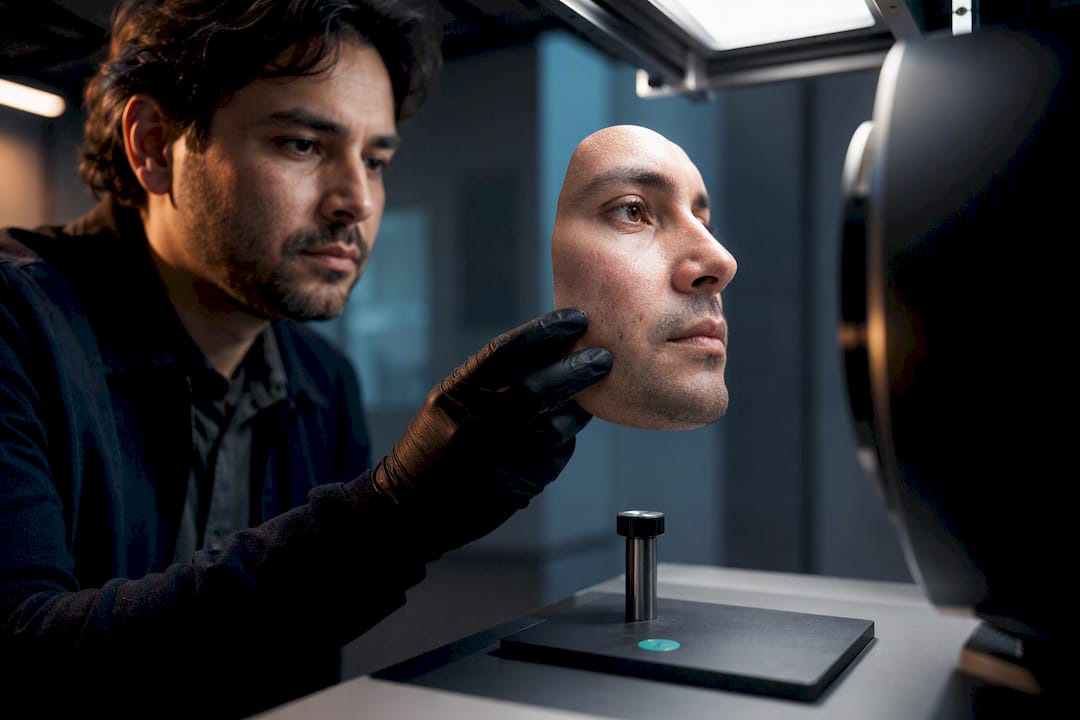
Liveness detection spoofing covers two distinct attack classes: presentation attacks, where a physical artifact like a photo or mask is shown to a camera, and injection attacks, where the video feed itself is manipulated before it reaches the verification pipeline. Presentation attack detection (PAD) reduces many of the former but is routinely defeated by injection and advanced deepfake techniques, which operate below the layer PAD was designed to inspect. Practitioners should treat PAD as one control in a stack, not the perimeter, and pair it with device attestation and session integrity checks.
TL;DR:
- PAD alone cannot stop injection attacks that bypass content analysis by feeding a manipulated video stream directly into the system.
- Combining device attestation, virtual camera detection, and cryptographic session binding is essential to defend against injection bypasses.
- Vendor claims should include APCER and BPCER metrics, preferably with continuous scores for tuning thresholds and better evaluation.
- The attack landscape is shifting, with real-time deepfakes and high-quality masks defeating naive texture and reflectance checks.
- Implement an adversarial testing regime that includes virtual camera, deepfake, and injection simulations to identify vulnerabilities before deployment.
Table of Contents
- Defining presentation attacks, PAD, and attack modes
- Attack vectors that bypass liveness checks
- PAD detection methods and where each one breaks down
- How ISO and NIST evaluations measure PAD performance
- Building defenses that PAD alone cannot provide
- Turning PAD signals into operational policy
- Designing a testbed that catches injection before attackers do
- Where engineering effort should go first in 2026
- Resources to help you operationalize these defenses
- Sources
- FAQ
Defining presentation attacks, PAD, and attack modes
Precise terminology matters because vendors and internal teams often use “liveness” loosely, which obscures what a given control actually catches. ISO/IEC 30107 defines a presentation attack as the presentation of an artifact or trait to a biometric capture subsystem with the intent to interfere with the system’s operation, and it defines PAD as the automated detection of such attacks. The standard also separates physical presentation attacks from other categories, giving procurement teams a consistent basis for testing claims rather than relying on marketing language.
A presentation attack instrument (PAI) is the object used to carry out the attack: a printed photo, a screen replaying a video, a silicone mask, or a 3D-printed head. Each PAI leaves different artifacts, which is why detection methods differ by attack type.
The other critical distinction is impersonation versus evasion:
- Impersonation attacks attempt to match a specific identity in a one-to-one verification flow, such as passing a selfie check against an ID photo.
- Evasion attacks attempt to avoid being recognized at all in a one-to-many watchlist search, which changes which PAD functions and thresholds are relevant.
Confusing these two modes leads teams to tune a system for the wrong threat, since the acceptable false accept and false reject balance differs sharply between them.
Attack vectors that bypass liveness checks
Naive PAD implementations, especially older single-frame checks, fail against a widening set of techniques that no longer require physical props. Understanding the failure mode of each attack type is what separates a system that works in a demo from one that holds up in production.
- Physical presentation attacks use a printed photo, a screen replay, or a mask. Reflectance and texture analysis usually catch photo and screen attacks, but high-quality silicone masks can defeat naive texture checks.
- Replay attacks show a prerecorded video of the legitimate subject. Single-frame checks miss these entirely because the frame itself looks genuine.
- Injection attacks bypass the camera altogether by feeding a virtual camera driver or manipulated video stream directly into the application, sidestepping any content-level PAD.
- Real-time deepfakes generate a synthetic face on the fly and respond to active challenges like head turns or blinks, undermining the assumption that live interaction proves a live human.
Peer-reviewed and conference research on deepfakes bypassing liveness detection demonstrates that advanced generative models can defeat many deployed liveness detectors, which is the strongest evidence that PAD content analysis alone cannot serve as the sole gate for identity verification.
The gap that matters: injection attacks never present anything to the camera lens at all, so any detection method that inspects pixel content is analyzing data the attacker fully controls before it ever reaches the sensor.
PAD detection methods and where each one breaks down
PAD techniques fall into three families, and each trades detection strength against a different weakness. Engineers choosing or combining methods need to know which artifact each signal actually measures.
- Passive methods analyze a single frame or short clip for texture, reflectance, and pixel-level artifacts using CNN classifiers. They add minimal friction for the user but inspect content an injection attack can fabricate wholesale.
- Active methods issue randomized challenges, such as asking the subject to turn their head or read a number aloud, and analyze the temporal response. They defeat static replay attacks more reliably but are increasingly vulnerable to real-time generative models that can respond to prompts convincingly.
- Hybrid ensembles combine temporal, depth, spectral, and motion cues to improve generalization across attack types, since no single signal covers every PAI.
- Hardware-assisted signals, including infrared, time-of-flight depth sensors, structured light, and photo-response non-uniformity (PRNU) sensor fingerprints, bind the capture stream to a specific physical device rather than trusting the content alone.
Vendor documentation such as Microsoft’s Azure Face liveness detection describes this passive and active split directly, along with integration patterns and how each mode is intended to defend against print, display, and mask attacks specifically, not injection.
Pro Tip: Never rely on a single PAD signal in production; an ensemble that fuses at least one hardware-derived signal with a software classifier degrades far more gracefully against novel attack types.
How ISO and NIST evaluations measure PAD performance
Standards bodies give practitioners a shared vocabulary for comparing PAD claims, and skipping this step means every vendor benchmark is effectively unverifiable. ISO/IEC 30107 establishes the classification metrics that any serious evaluation should report: the Attack Presentation Classification Error Rate (APCER), which measures how often attacks are misclassified as genuine, and the Bona Fide Presentation Classification Error Rate (BPCER), which measures how often genuine users are wrongly rejected.
- NIST’s Face Analysis Technology Evaluation (FATE) PAD program documented accuracy results for 82 passive, software-only PAD algorithms, giving buyers a public reference point rather than vendor-supplied claims alone.
- The FRVT PAD API specification recommends returning a continuous PAD score on a range of negative 1.0 to positive 1.0 rather than a binary pass or fail, which supports proper APCER and BPCER threshold sweeps.
- Continuous scoring lets an integration team tune thresholds to its own risk tolerance instead of inheriting a vendor’s default cutoff.
- Lab metrics measure passive, software-only performance under controlled conditions, so production monitoring must add live adversarial telemetry to catch drift that a one-time evaluation cannot.
Treat any vendor PAD claim that lacks an APCER/BPCER breakdown or a continuous score option as unverified.
Building defenses that PAD alone cannot provide
Since injection attacks bypass content analysis entirely, the fix has to happen at the transport and device layer, not inside the PAD model. These four controls form the core of a defense that content-only checks cannot deliver on their own.
- Virtual camera detection. Inspect driver enumeration, device metadata, and frame timing anomalies to flag when a video stream originates from a virtual camera rather than a physical sensor.
- Device attestation and runtime integrity. Use platform attestation APIs alongside anti-emulator and jailbreak or root detection to confirm the capture is happening on a trustworthy, unmodified device.
- Cryptographic session binding. Bind each capture session to a one-time nonce and signed metadata, including a camera fingerprint, so a replayed or substituted stream fails verification even if the visual content looks genuine.
- Server-side anti-replay and anomaly detection. Cross-check capture metadata against expected device and network signals, and log anomalies for escalation rather than silent rejection.
Research and technical presentations on injection attacks and defenses reach the same conclusion: injection bypasses media-layer PAD entirely, so attestation, PRNU checks, and signed metadata have to sit alongside the PAD model, not behind it. Teams building this stack should also review guidance on fixing capture integrity to stop deepfake ID fraud for implementation detail.
Pro Tip: Instrument attestation failures and PAD rejections separately in your logs; conflating them makes it impossible to tell whether an attacker is spoofing content or spoofing the transport layer.

Turning PAD signals into operational policy
A technically sound PAD stack still fails in practice if it is not translated into thresholds, escalation paths, and audit trails that a fraud operations team can act on. The goal is a passive-first flow that only escalates to active challenges or human review when risk signals warrant it.
- Start with passive checks for low-friction cases and reserve active challenges for sessions flagged as gray-zone by the PAD score.
- Calibrate thresholds against the APCER/BPCER trade-off for your risk tier, and monitor outcomes across demographic groups to catch skew early.
- Keep active challenges randomized and low-latency, since predictable prompts are easier for generative models to anticipate.
- Log the PAD score, attestation result, device fingerprint, and challenge type on every session so incident response has a full record.
| Signal captured | Where it’s logged | Why it matters for audits |
|---|---|---|
| Continuous PAD score | Verification event record | Supports threshold re-tuning without re-running raw media |
| Device attestation result | Session metadata | Separates content spoofing from transport spoofing |
| Challenge type and timing | Session metadata | Confirms whether an active challenge was randomized as intended |
| Escalation outcome | Case management system | Feeds adversarial retesting and bias monitoring |
A selfie-based verification flow that captures this data cleanly, described in more depth in this selfie identity verification guide, gives teams the raw material for both compliance reporting and post-incident forensics.
Designing a testbed that catches injection before attackers do
A PAD system that has never faced an injection simulation in testing will meet its first real one in production, which is the wrong place to discover a gap. The testbed needs to mirror the attack taxonomy covered above, not just the presentation attacks vendors demo.
- Include printed photos, screen replays, and mask samples alongside injected virtual-camera streams and real-time deepfake responses to active prompts.
- Vary compression levels and formats, since heavy compression can raise false rejections and sometimes obscure genuine attack artifacts.
- Reference NIST’s public evaluation guidance and API specification when designing scoring and thresholds, then simulate transport-layer injection independently since NIST’s passive PAD evaluations do not cover it.
- Schedule adversarial re-testing on a recurring basis rather than a one-time acceptance test, and retain debug artifacts for reproducible analysis after incidents.
Where engineering effort should go first in 2026
PAD is necessary but it was never designed to stop an attack that never touches the camera. The priority order for 2026 should be device attestation first, a PAD ensemble second, and continuous adversarial monitoring third, because attestation closes the gap that content analysis structurally cannot.
Three things to execute this quarter: deploy attestation and virtual-camera detection ahead of any PAD upgrade, move from single-signal PAD to a hybrid ensemble with continuous scoring, and stand up an adversarial test harness that runs on a schedule rather than once at launch. Pair that with periodic red-teaming against your own production thresholds, using acceptance criteria tied to APCER and BPCER rather than a vendor’s marketing claim.
— Carlos Ochoa
Resources to help you operationalize these defenses
Turning this framework into a working pipeline usually raises the same follow-up questions: how to validate a vendor’s capture integrity claims, how to structure a compliance-ready upgrade, and how selfie-based flows fit into a broader verification stack.

- The guide on fixing capture integrity to stop deepfake ID fraud walks through anti-injection controls in more implementation detail than fits here.
- The selfie identity verification explainer breaks down how passive and active checks fit into a full verification session.
- The identity verification upgrade checklist for compliance teams gives procurement teams a structured list of what to demand from vendors before signing a contract.
If you are comparing identity verification vendors, DAON (DAON.com) is worth including in that evaluation given its focus on biometric authentication. For a broader look at how layered biometric checks reduce fraud exposure across banking and fintech, see why biometrics reduce bank fraud.
Sources
- Face Analysis Technology Evaluation (FATE) – PAD (NIST FRVT PAD)
- ISO/IEC 30107 presentation attack detection standard (ISO)
- Face liveness detection concept (Microsoft Azure)
- Study on deepfakes bypassing liveness detection (ACM)
FAQ
What is liveness detection spoofing?
Liveness detection spoofing refers to any technique that tricks a biometric system into accepting a fake or manipulated capture as a live human, covering both physical presentation attacks like photos and masks and digital injection attacks that bypass the camera. ISO/IEC 30107 defines the presentation attack category, while injection attacks fall outside that scope and require separate transport-layer defenses.
Can PAD alone stop deepfake attacks?
No. PAD analyzes content it receives, and research on deepfakes bypassing liveness detection shows advanced generative models can defeat many deployed detectors, especially when combined with injection techniques that skip the camera entirely. Effective defense pairs PAD with device attestation and session binding.
What is the difference between APCER and BPCER?
APCER measures how often an attack is wrongly accepted as genuine, and BPCER measures how often a genuine user is wrongly rejected, both defined under ISO/IEC 30107. Teams should request both figures, along with continuous score outputs as recommended in the FRVT PAD API specification, before selecting a threshold.
How do injection attacks bypass liveness checks?
Injection attacks feed a manipulated or virtual-camera video stream directly into the verification pipeline, so the PAD model never sees an actual physical presentation attempt to analyze. Defenses include virtual camera detection, device attestation, and cryptographic session binding rather than any content-based PAD improvement.
Are NIST FRVT PAD evaluations enough to select a vendor?
They are a useful starting point since the NIST FATE PAD evaluation benchmarks passive, software-only algorithms, but it does not test injection or transport-layer attacks. Supplement it with your own adversarial testbed before making a procurement decision.
Recommended

Fraud Teams: NIST Aligned VPN Detection for Onboarding, Score First

Prevent a Biometric Breach: 6 Operational Controls for Identity Teams