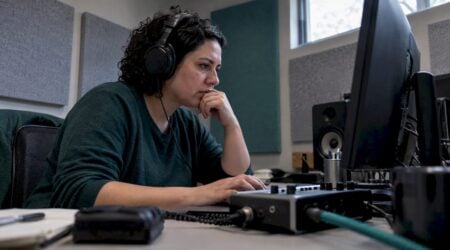
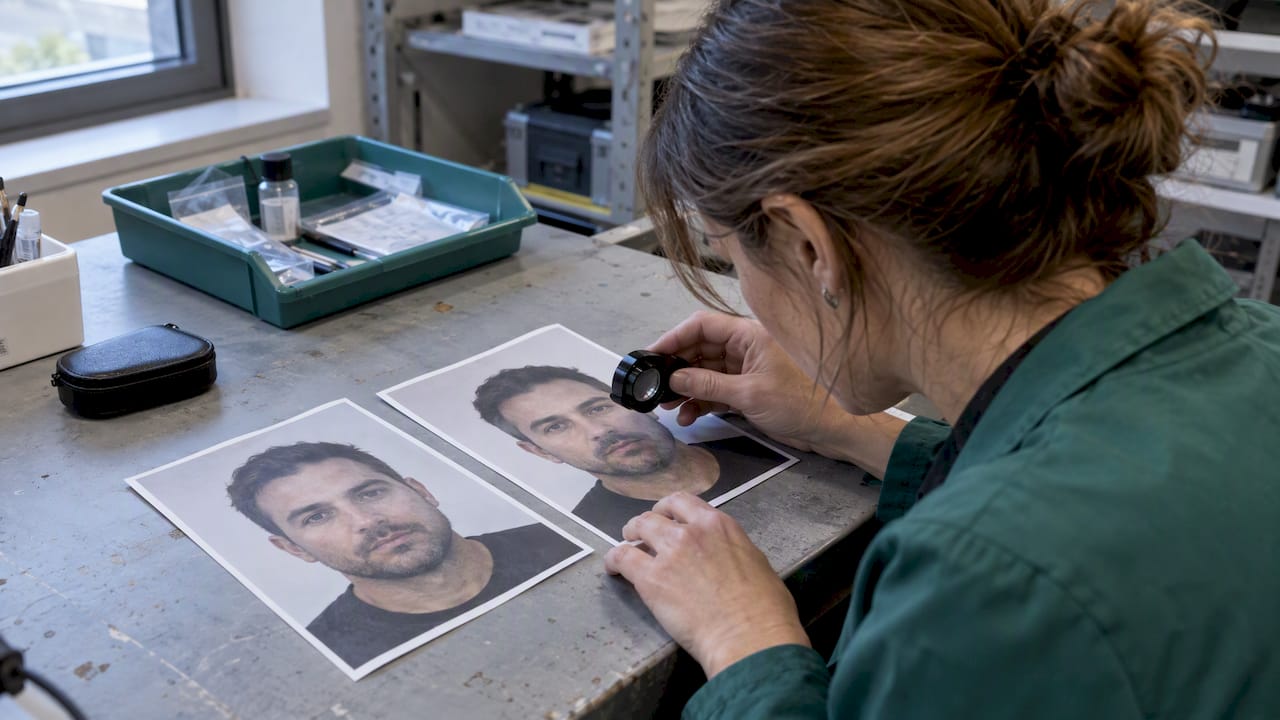
Automated morph-attack detection tools help, but they cannot replace prevention: differential detection (D-MAD) is generally more robust than single-image detection (S-MAD) when a trusted probe photo exists, and organizations should treat detection as one layer in a broader defense. NIST recommends prioritizing trusted capture over relying on detection alone, which means routing low-confidence results to human review rather than trusting a single automated score.
TL;DR:
- Differential detection methods are more robust than single-image analysis because they compare new photos against trusted reference images to detect morphs.
- Generative adversarial networks and diffusion models produce more convincing morphs that are harder for automated tools to detect, especially after printing and scanning.
- Successful detection relies on combining artifact analysis with identity comparison, training on diverse datasets, and maintaining strict thresholds to balance false acceptances and rejections.
- Trusted capture via controlled, supervised imaging significantly reduces the risk of morphing attacks being submitted.
- Human review should supplement automated detection, as manual inspection alone is unreliable and prone to error.
Table of Contents
- What Face Morphing Is and Why It Matters for Verification
- S-MAD vs D-MAD: Algorithms, Strengths, and Failure Modes
- Benchmarks, Metrics, and Dataset Limits
- A Prevention-First Deployment Pipeline
- Research-to-Practice Checklist and Measurement Plan
- Where the Research Still Falls Short
- Where to Find Vendor-Neutral Research on Morph Defense
- FAQ
- Sources
What Face Morphing Is and Why It Matters for Verification
Face morphing blends two people’s facial images into a single photo that a facial recognition system, and often a human examiner, can match to both individuals. The attack typically targets enrollment, passport issuance, or document renewal, letting one person apply under their own identity while embedding a second person’s biometric template in the same credential. Once accepted, that document lets the second person travel or authenticate under someone else’s name.
Morph generation has evolved considerably:
- Landmark warping and alpha blending: classic techniques that align facial landmarks and blend pixel intensities, producing visible artifacts around eyes, hairlines, and ears.
- Generative adversarial networks (GANs): produce smoother, more convincing composites with fewer blending seams.
- Diffusion models: increasingly used to generate high-fidelity morphs that resist traditional artifact-based detection.
- Manual editing: retouching by a skilled operator to remove residual artifacts after automated morphing.
Printing, scanning, and recompression during document issuance strip away many of the subtle pixel-level traces that automated detectors rely on, which is part of why detection difficulty keeps rising even as generation tools become more accessible.
S-MAD vs D-MAD: Algorithms, Strengths, and Failure Modes
Detection approaches split into two families, and the distinction matters for anyone choosing or building a pipeline.
- Single-image detection (S-MAD) analyzes one photo in isolation, looking for signs of blending. Common techniques include residual analysis methods such as PRNU (sensor-noise fingerprinting) and Laplacian residual filters, dedicated artifact detectors trained on known morph generators, and convolutional neural networks or transformer-residual hybrids trained end to end on morph versus bona fide images.
- Differential detection (D-MAD) compares a submitted photo against a trusted reference, such as a prior passport photo or a live capture. Methods include direct 1:1 similarity scoring, 1:N gallery searches that exploit rank-1 versus rank-2 score separation, and neural classifiers trained on the similarity-score distributions themselves rather than raw pixels.
The core weakness of S-MAD is overfitting. A detector trained on GAN-based morphs often fails against diffusion-based or manually retouched ones, because it has learned to spot a specific generator’s fingerprint rather than morphing in general. NIST’s FATE MORPH benchmarking documents exactly this pattern: single-image detectors perform well on in-distribution test sets but degrade sharply on unseen generation methods, while differential detectors hold up more consistently across methods because they rely on identity mismatch rather than pixel artifacts.
D-MAD is not immune to failure. It depends on having a trusted probe image, which does not exist for first-time enrollment, and its accuracy degrades with natural aging, look-alike relatives, and poor-quality reference photos. Both families suffer when the input has been printed and rescanned, compressed heavily, or captured at low resolution, conditions common in real document workflows.
Pro Tip: Favor hybrid pipelines that combine an artifact detector with identity-score checks, and train on datasets spanning multiple morph-generation methods to reduce overfitting to any single generator.
Benchmarks, Metrics, and Dataset Limits
Interpreting a vendor’s detection claim requires knowing the operating point behind it. Two metrics dominate the field: MACER (Morph Acceptance Classification Error Rate), the rate at which morphs are wrongly accepted as genuine, and BSCER (Bona fide Selfie Classification Error Rate), the rate at which genuine photos are wrongly flagged as morphs. ISO/IEC 20059:2025 standardizes how these metrics and the underlying test procedures should be reported, making cross-vendor comparison possible only when both sides report figures at matching thresholds. DET (Detection Error Tradeoff) curves plot MACER against BSCER across thresholds, and shifting the operating point toward lower false acceptance almost always raises false rejection.
NIST’s FRVT IR.8430 testing found that 1:N face recognition searches, using rank-1 versus rank-2 score separation, can be effective for morph detection in document renewal scenarios, though performance depends heavily on gallery completeness and the chosen threshold.
Dataset limitations remain a core research gap:
- Most published detectors are trained and tested on a narrow set of morph-generation tools, which inflates reported accuracy relative to real-world deployment.
- Cross-dataset generalization, testing a detector trained on one dataset against morphs from a different source, routinely shows significant performance drops.
- Newer proposals such as the MFFI dataset concept aim to close this gap by covering dozens of forgery methods and far larger sample counts, pointing toward the kind of diversity future benchmarks will need.
A Prevention-First Deployment Pipeline
The strongest control is preventing untrusted photo submission in the first place through practical AI deployment and systems integration methods outlined in AI agents: Moving beyond the hype to practical business applications. Trusted capture, where a supervised camera or a controlled selfie-capture flow produces the image, removes the opportunity to submit a pre-morphed photo entirely. Our selfie identity verification explainer covers how capture-flow integrity reduces this risk at the source. When trusted capture is not possible, MAD becomes a layered control rather than a standalone decision-maker.
A practical pipeline looks like this:
- Score automatically with S-MAD and D-MAD (where a trusted probe exists) and record both raw scores and the generator or dataset context.
- Apply risk thresholds tuned to your acceptable MACER and BSCER at a documented operating point, not a single blanket cutoff.
- Route low-confidence or high-risk results to human review, with explicit triggers: borderline similarity scores, first-time enrollment with no probe image, or any image flagged as printed and rescanned.
- Escalate confirmed suspicious cases to forensic review, preserving the original file and metadata for audit.
Human review matters because manual inspection alone is unreliable. Experimental work on human morph detection found that reviewers make frequent errors and show limited improvement even after training, which argues for pairing trained examiners with automated scoring rather than relying on either alone.
Pro Tip: Log every threshold decision and re-run your pipeline against a sequestered test set, one your models never trained on, at a fixed cadence so drift in real-world morph quality does not go unnoticed.
Research-to-Practice Checklist and Measurement Plan
Translating the research above into an operating program comes down to a short list of commitments:
- Capture controls: require supervised or liveness-checked capture wherever enrollment policy allows it.
- Benchmarking plan: test against datasets covering multiple morph-generation methods, printed-and-scanned samples, and degraded resolution, not just your training distribution.
- Review SOP: define exact MACER and BSCER thresholds that trigger human review, and document who reviews, how, and within what time window.
- Re-benchmarking cadence: re-test quarterly, or after any known shift in generation techniques, against a sequestered dataset and report MACER, BSCER, and false escalation rate together.
Our Identity Verification Upgrade Checklist walks compliance teams through adapting this structure to existing verification stacks.
Where the Research Still Falls Short

The biggest gap in this field is not detection accuracy on clean test sets, it is generalization. A detector that scores well against one morph generator and collapses against another is not production-ready, no matter how impressive its published numbers look. We would rather see fewer papers reporting a single dataset’s MACER and more reporting performance across print-scan degradation, low-resolution capture, and generation methods the model never saw in training.
Participation in independent benchmarks like FATE MORPH, and publication of reproducible, diverse datasets, matters more right now than incremental architecture tweaks. None of that replaces a human-in-the-loop process: automated tools narrow the problem, people still have to close it.
— Carlos Ochoa
Where to Find Vendor-Neutral Research on Morph Defense
We cover biometric fraud and identity verification as an ongoing beat, not a one-time guide, which is why our reporting tracks how MAD research moves from benchmark to deployment.

Readers building or auditing a morph-detection program can start with two of our resources:
- Our Identity Verification Upgrade Checklist breaks down capture, scoring, and review steps into a format compliance teams can adopt directly.
- Our piece on why biometrics reduce bank fraud covers how trusted capture fits into a broader fraud-prevention stack.
Among commercial identity-verification options, DAON is worth evaluating for organizations assembling a layered verification stack that pairs biometric matching with document checks. Readers can subscribe to ongoing coverage for updates as new benchmarks and detection methods reach publication.
FAQ
Is face morphing real?
Yes. Face morphing is a documented attack technique where two people’s facial images are blended into a single photo that can match both individuals on facial recognition systems, and NIST has issued guidance specifically addressing it. It has been demonstrated against passport and ID enrollment workflows in both research and operational testing.
Is there an AI that can morph faces?
Yes. Morphs are commonly generated using landmark-warping and blending software, generative adversarial networks, and increasingly diffusion models, each producing composites with different artifact patterns. The method used to generate a morph directly affects which detection approach, S-MAD or D-MAD, is more likely to catch it.
How can I detect a face from a photo?
Automated detection relies on either single-image analysis (S-MAD), which looks for blending artifacts in one photo, or differential analysis (D-MAD), which compares the photo against a trusted reference image. NIST’s FATE MORPH benchmarking found D-MAD generally more consistent across different morph-generation methods, though it requires a trusted probe image to work.
Is face recognition 100% accurate?
No system is stated to be fully accurate; facial recognition and morph detection both show measurable error rates that shift with image quality, generation method, and threshold settings. Human reviewers also make frequent errors when asked to spot morphs manually, which is why layered automated and human review processes outperform either approach alone.
Sources
- NIST: Guidelines can help organizations detect face photo morphs, deter identity fraud
- NIST FRVT IR.8430: Utility of 1:N face recognition algorithms for morph detection
- NIST FATE MORPH / FRVT MORPH report
- Face morphing attacks: Investigating detection with humans
Recommended
Meet NIST 0.1 DFAR/DFRR with MRZ Verification for Compliance Teams

Pass Examiners: 4 Red Flags Rule Program Controls Regulators Want