
19
Feb
Child Identity Theft: Why Minors Are Prime Targets and How to Shield Them
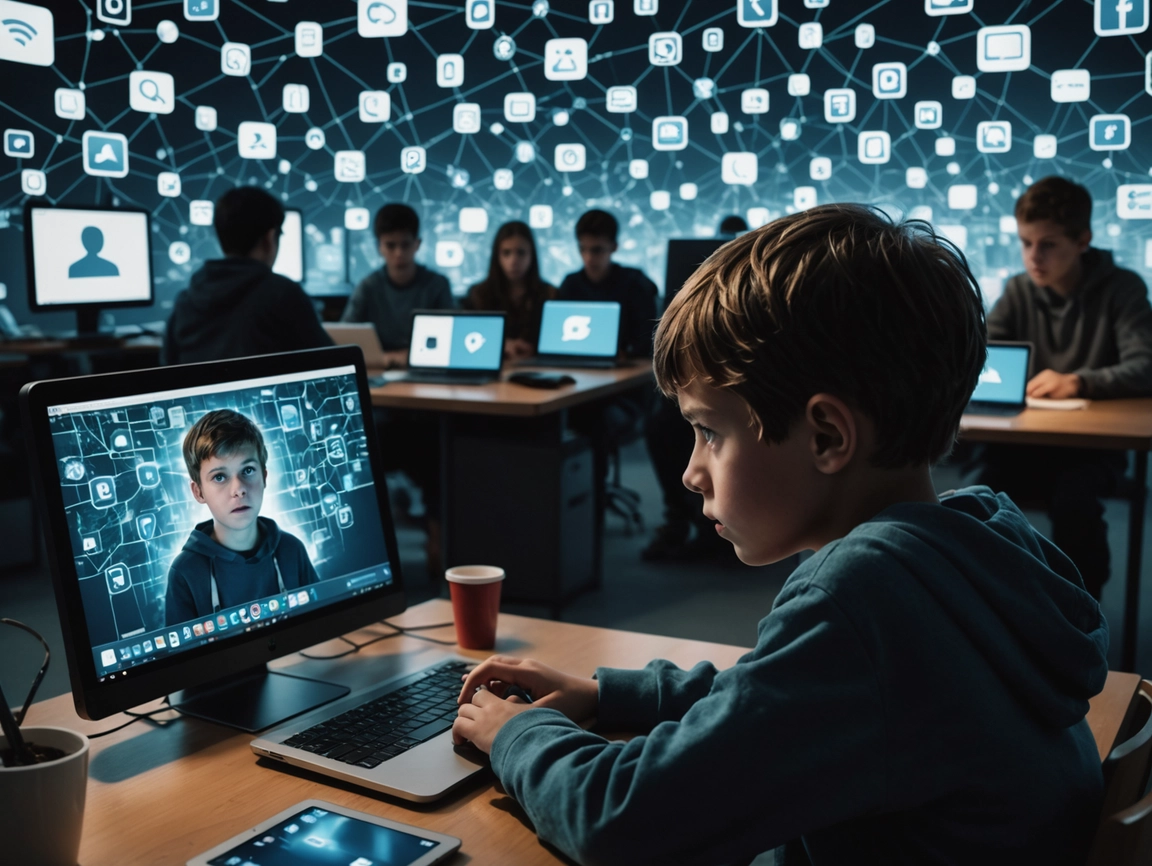
The theft of a child’s identity is an emerging form of cybercrime that often remains undetected for years. As cybercriminals grow more sophisticated, they increasingly view minors as lucrative targets for fraud and data exploitation. Understanding how and why this occurs is critical for parents, policymakers, and cybersecurity professionals working to close the gap between vulnerability and prevention.
1. The Growing Threat Landscape of Child Identity Theft
Child identity theft has accelerated in frequency due to the expanded digital footprint children now maintain from an early age. Every online registration, educational platform, or social media account potentially exposes personal identifiers such as Social Security numbers (SSNs), birthdates, and addresses. When combined, these data points can be exploited by malicious actors to create fraudulent financial or medical records.
Unlike adults, children rarely interact with credit systems, making their personal data an attractive target for long‑term exploitation. Cybercriminals recognize that a stolen child identity can be used for years before discovery, often when the child first applies for credit or student loans. This extended window of undetectability provides perpetrators with a prolonged advantage, allowing multiple fraudulent schemes under one identity.
Investigations by consumer protection agencies and cybersecurity firms indicate that child identity theft often occurs via large‑scale data breaches, misuse by family members, or phishing schemes targeting parents. These incidents highlight how interconnected family data ecosystems can unknowingly expose minors’ identities. The problem, therefore, extends beyond direct attacks on children—it is also a consequence of broader household cyber hygiene practices.
2. Why Minors Are Prime Targets for Identity Fraudster
Minors represent an almost “clean slate” within banking and credit systems, lacking previous transaction histories or negative marks. This makes their credit profiles highly valuable to criminals who can open lines of credit, secure loans, or commit tax fraud under assumed identities. In many cases, these fraudulent activities remain invisible due to the absence of any active monitoring on a child’s credit report.
The relative inattention of guardians to children’s financial identities contributes significantly to this vulnerability. Parents often fail to realize that their child even possesses a credit file until fraudulent charges or collection notices appear years later. Fraudsters exploit this informational gap, leveraging automation and dark web marketplaces to sell and trade children’s data.
Moreover, the widespread use of digital education platforms, social media, and healthcare portals by minors enriches the available dataset for exploitation. When educational institutions and pediatric healthcare systems suffer breaches, minors become part of broad identity pools attractive to cybercriminal syndicates. Because these networks handle sensitive information with varying degrees of cybersecurity maturity, they frequently serve as the first point of compromise.
3. Common Pathways and Techniques Used in Exploiting Minors’ Data
The primary techniques employed in child identity theft mirror those used in adult compromises, including phishing, malware infiltration, and database breaches. However, the specific targeting of educational or health data repositories introduces a unique dimension. Since these entities often operate under limited cybersecurity budgets, attackers view them as soft targets for mass data exfiltration.
Another pathway involves “synthetic identity fraud,” where criminals blend real child identifiers with fabricated data to create entirely new personas. This hybrid identity can pass basic verification checks while concealing fraudulent activities for years. Synthetic identities derived from minors’ SSNs are particularly difficult for authorities to trace due to mismatched birthdates or non‑existent prior credit histories.
Internal misuse also presents a subtle vector of risk. Family or acquaintances with legitimate access to a child’s sensitive documents may engage in opportunistic fraud during financial distress. Such insider‑driven compromises often escape detection and complicate law enforcement investigations due to familial privacy protections.
4. Detecting and Preventing Child Identity Misuse
The early detection of child identity theft hinges on proactive credit and data monitoring. Parents can request a credit freeze or create a protected file with major credit bureaus to prevent unauthorized access. Regular inspection for inquiries or accounts associated with a minor’s SSN serves as an essential baseline for vigilance.
Institutional cooperation is equally vital. Schools, healthcare providers, and youth programs must adhere to stringent data protection standards—including encryption, access control, and incident response protocols—to reduce exposure. Training personnel to recognize suspicious requests for student data can mitigate insider or external exploit attempts.
Technological solutions such as identity monitoring services, AI‑driven anomaly detection systems, and zero‑trust architecture can significantly enhance preventive resilience. While no system is foolproof, layered defense frameworks that integrate parental oversight and institutional responsibility provide the most promising deterrent effect. Consistent audit trails and rapid breach notification mechanisms further ensure minimized damage when compromise occurs.
5. Policy, Legal Responses, and Future Safeguards
Current privacy laws such as the Children’s Online Privacy Protection Act (COPPA) and the Fair Credit Reporting Act (FCRA) provide partial frameworks but insufficient enforcement in digital ecosystems. Many experts argue that systemic reform is required to bridge technological advancement with real‑time identity protection for minors. A unified national policy emphasizing cross‑sector data accountability could narrow the opportunity window for exploitation.
Enhanced cooperation between government regulatory bodies, tech providers, and financial institutions will be necessary to implement scalable solutions. Sharing threat intelligence and integrating automated verification systems can help detect irregularities across registries faster. However, privacy advocates caution that extensive data pooling could introduce new risks if not governed by transparent and ethical use standards.
Looking forward, investment in digital literacy programs for families may offer the most sustainable deterrent against child identity theft. Empowering guardians with technical understanding—such as recognizing social engineering patterns or configuring secure authentication—translates directly into long‑term safety. As awareness expands, civil infrastructure must evolve to ensure that children’s digital identities receive the same legal and technological protection as their physical ones.
Child identity theft represents an intersection of cybersecurity failure, social oversight, and economic incentive. The combination of unmonitored personal data and sophisticated digital fraud techniques makes minors uniquely susceptible. Only a proactive blend of policy reform, institutional responsibility, and informed parental vigilance can shift the balance toward prevention rather than reaction in this growing threat landscape.
RELATED
Posts

3
Aug
$5.5M Doxim Settlement Underscores the Critical Need for Advanced eKYC and ID Verification in the Financial Sector
Doxim, a prominent customer communications management provider for credit unions and financial institutions, has agreed to a $5 million settlement to resolve a class action lawsuit stemming from a widespread data breach.
The lawsuit (Case No. 2:24-cv-11550, United States District...
31
Jul
How Continuous Authentication and Behavioral Biometrics Detect Infiltrated AI Sessions
SPECIAL REPORT SERIES: PART 4 OF 4 • ← Return to Main Series Hub
...

31
Jul
Deepfake Detection and Camera Injection Defenses in the Age of Generative AI
SPECIAL REPORT SERIES: PART 3 OF 4 • ← Return to Main Series Hub
...