In 2026, the rise of biometric identity verification has made liveness detection a pivotal battlefield against sophisticated fraud. As attackers leverage deepfakes, generative AI, and high-resolution spoofing, the distinction between passive and active liveness detection methods has grown increasingly critical. This article investigates which approach—passive or active—demonstrates stronger resilience against fraud in modern digital ecosystems.
While both techniques aim to determine whether a biometric sample originates from a live human rather than a synthetic or replayed image, their operational methods differ substantially. Active systems rely on user interaction, while passive methods use background analysis to infer authenticity. With each approach evolving to counter more advanced threats, 2026’s security landscape demands a rigorous examination of their effectiveness.
To answer which approach better stops fraud, it is essential to explore technical advancements, deployment challenges, and real-world outcomes across sectors. This investigation draws from industry reports, technical research, and security benchmarks to reveal the comparative strengths and weaknesses of each.
Understanding Liveness Detection Fundamentals
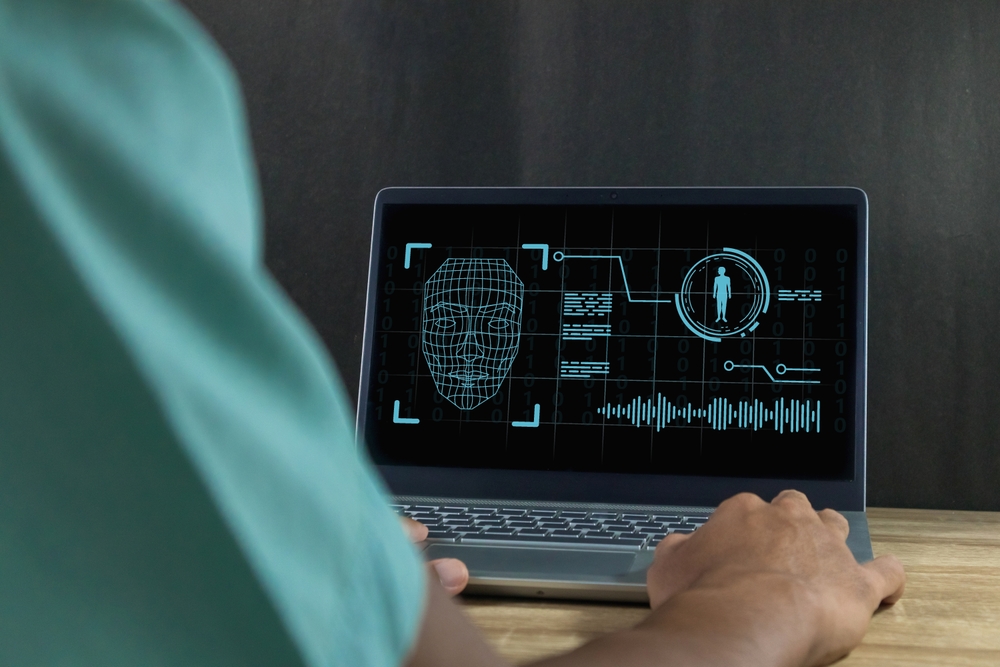
Liveness detection is the process of verifying that a biometric sample, such as a facial scan, originates from a real, live subject rather than a static photo or digital replay. The concept became central as face recognition systems became targets for presentation attacks, where fraudsters use masks, photos, or videos to impersonate legitimate users. In 2026, nearly every biometric platform deploys some level of liveness detection.
At a technical level, liveness systems analyze biometric signals—micro-movements, texture variations, depth information, and environmental reflections—to confirm vitality. The underlying task is to measure cues of life, such as blinking or blood flow, or to detect inconsistencies typical of spoof media. The goal is to differentiate genuine biometric patterns from artificial manipulations without degrading user experience.
Regulatory frameworks such as ISO/IEC 30107-3 have standardized testing protocols for anti-spoofing performance, influencing both passive and active detection models. As compliance pressures increase, organizations must not only select a secure method but also ensure it withstands independent testing under evolving threat conditions.
Active Liveness Detection: Strengths and Limitations
Active liveness detection requires the user to perform an explicit task, such as turning their head, smiling, or following an on-screen prompt. This interaction helps confirm the presence of a live participant responding dynamically to instructions. Its strength lies in interactive authentication, which can make replaying pre-recorded content or controlling deepfake responses more difficult.
However, the reliance on user prompts introduces friction, reducing convenience during onboarding and verification. If latency or environmental conditions interfere, genuine users can be falsely rejected—a challenge known as false rejection rate (FRR). Moreover, in 2026’s mobile-first identity environments, users expect seamless verification without complex gestures or voice instructions.
From a technical standpoint, active systems may still be susceptible to AI-driven spoofing that can simulate real-time motion based on the expected prompts. Attackers using real-time face synthesis tools can potentially mimic active gestures if they can anticipate or intercept challenges. Thus, while active liveness detection remains robust, its advantage hinges on unpredictability in prompt design and secure execution pipelines.
Passive Liveness Detection: Innovating Beneath the Surface
Passive liveness detection minimizes user involvement by analyzing intrinsic features of facial or biometric data without requiring explicit movement. Using advanced computer vision and AI-based signal processing, it evaluates image quality, depth maps, and multi-spectral data to detect signs of authenticity. The process aims to achieve high-security screening while maintaining frictionless user experiences.
In 2026, passive systems have benefited from deep learning models capable of detecting subsurface reflections, texture consistency, and sensor-origin analysis within a single frame. These features help distinguish between genuine skin and synthetic materials or digital renderings. The latest algorithms incorporate generative adversarial training to anticipate spoofing behaviors before they appear in real-world attacks.
Yet, the reliance on statistical inference over explicit prompts introduces interpretability challenges. Passive detectors must generalize across devices, sensors, and lighting conditions without compromising accuracy or inclusion. This complexity demands continuous retraining with adversarial datasets to maintain robustness against evolving deepfake methods.
Comparing Fraud Prevention Effectiveness in 2026
In head-to-head evaluations, active liveness detection retains an edge in controlled environments where user cooperation is assured. Financial services and high-security government applications often favor active methods for their deterministic validation. Nonetheless, their usability constraints prevent large-scale adoption for everyday consumer verification.
Passive detection, conversely, dominates high-volume use cases like remote onboarding and e-commerce identity verification. Its ability to operate invisibly in the background makes it ideal for low-friction authentication. In 2026, benchmark reports suggest passive systems achieve lower false acceptance rates against AI-manipulated facial spoofs when adequately trained on diverse threat datasets.
Ultimately, no single approach universally “stops more fraud.” Instead, hybrid architectures—combining passive algorithms for initial screening with active verification for high-risk cases—show the best overall fraud prevention metrics. Organizations that integrate both strategies, supported by continuous model updates, adapt best to the dynamic threat landscape of 2026.
By 2026, the debate between passive and active liveness detection reflects a deeper tension between security assurance and user experience. Active methods offer precise, challenge-based validation but struggle with usability and evolving AI-driven attacks. Passive systems deliver seamless authentication yet demand constant innovation to keep pace with emerging spoofing technologies.
The most effective strategy moving forward is layered defense, in which liveness detection serves as one component of a broader identity assurance framework. Real-time threat intelligence, adaptive risk scoring, and hardware-based trust signals complement liveness detection to create resilient authentication ecosystems.
As deepfake capabilities continue to advance, the boundary between live and synthetic presence will blur even further. The organizations that succeed will not merely choose between passive and active detection but will continuously adapt, combining their strengths to neutralize the next generation of fraud.