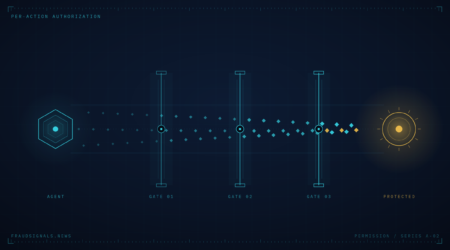
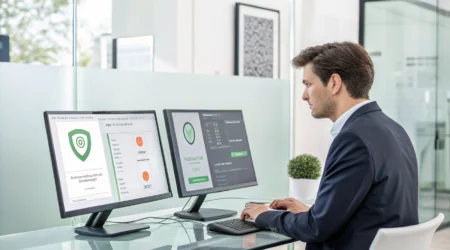
Voice authentication has entered a new era in 2026, where voiceprint technology is not just a futuristic idea but an operational standard for many call centers. As threats in digital communication multiply, the need to verify identity through natural, biometric signals has gained momentum. This investigative report examines how voiceprint systems are being deployed, the technology behind their accuracy, and the challenges they still face in balancing privacy and performance.
The use of voice as a security credential has evolved far beyond novelty. In recent years, machine learning algorithms and robust acoustic modeling have made voiceprint recognition more precise and resilient to fraud. Yet, with great adoption comes heightened scrutiny over data handling, consent protocols, and the unseen biases embedded in voice analysis models.
This article dives into the technical core of these systems and assesses their real-world impact on call center operations. Through insights from cybersecurity researchers, call center operators, and voice technology vendors, we explore the interplay between security efficiency and ethical responsibility. The findings suggest a landscape both promising and precarious for voice-based identity verification.
The Evolution of Voice Authentication Technology
Voice authentication has roots in early speaker recognition research from the late 20th century, but it wasn’t until advances in deep neural networks that practical deployment became viable. These systems distinguish hundreds of micro-characteristics in speech — pitch, tone, cadence, and even micro-vibrations of the vocal cords. With 2026 hardware and cloud resources, this process now happens in milliseconds, allowing instant verification during a live call.
By 2026, many platforms employ multi-factor voice analytics, combining voiceprint matching with speech content analysis, emotion detection, and background noise profiling. This layered approach improves accuracy under noisy conditions typical of call center environments. The result is a security checkpoint disguised as a natural conversation, reducing friction for both agents and customers.
However, this evolution was not linear or risk-free. Early systems struggled with environmental interference, voice aging, and limited dataset diversity, leading to high false rejection rates. Recent technological improvements have mitigated these problems, but experts warn that no model is immune to spoofing unless paired with liveness detection and anomaly monitoring mechanisms.
How Call Centers Use Voiceprints in 2026
Modern call centers use passive voice authentication, where a customer’s voiceprint is verified seamlessly during conversation, rather than asking for PINs or passwords. This reduces verification time from minutes to seconds and improves customer experience without compromising security standards. Systems compare real-time speech with stored encrypted voice models, triggering alerts only when anomalies are present.
Voiceprints are stored as feature vectors, mathematical representations derived from acoustic properties, rather than raw recordings. This not only improves data storage efficiency but also adds a layer of anonymization — a crucial factor for compliance with global privacy frameworks such as the GDPR and emerging AI-focused regulations in Asia and North America. Each interaction refines the customer’s model, enhancing accuracy with usage.
Implementation across global call centers, however, remains uneven. While large financial institutions and telecom providers lead adoption, smaller operators often face integration costs and regulatory ambiguity. Experts note that ensuring interoperability across systems remains a challenge, especially when vendors use proprietary encoding methods that limit cross-platform data migration.
Technical Foundations and Security Safeguards
At the heart of voiceprint technology lies feature extraction, the process of converting raw sound waves into a unique digital pattern. Algorithms such as Mel-Frequency Cepstral Coefficients (MFCCs) and newer spectral models capture fine-grained frequency information critical to distinguishing individual voices. These raw features are then passed through neural embeddings, which learn to differentiate between identity-related and incidental vocal elements.
Security systems in 2026 now employ anti-spoofing techniques to combat deepfake attacks. These methods analyze subtle inconsistencies in acoustic resonance and temporal rhythm, which synthetic voices often fail to replicate convincingly. Some platforms integrate ultrasound-based verification or cross-referencing with device metadata to establish source authenticity before granting access.
Still, the reliability of these defenses depends on continuous data retraining. Fraud tactics evolve as rapidly as countermeasures, requiring constant algorithmic updates. Many organizations now maintain threat intelligence teams dedicated to monitoring trends in synthetic voice generation and updating detection heuristics in real time.
Ethical and Privacy Implications
With voice as a biometric key, privacy becomes both the enabler and the concern. Voiceprints, by their very nature, contain personal information that can reveal emotional state, physical condition, and linguistic background. Regulators have begun classifying voice data as sensitive biometric information, subjecting it to strict consent, retention, and transfer rules.
Investigations into commercial practices reveal mixed compliance capacities among call centers. Some adopt data minimization, retaining only essential voiceprint vectors, while others maintain broader repositories for “model training” under unclear consent models. Analysts argue that clear oversight mechanisms are urgently needed, particularly as AI vendors operate across jurisdictions with divergent data protection laws.
Beyond compliance, there’s an ethical dimension to how voice data might be used or misused. Bias detection remains underdeveloped: research shows that voice authentication systems occasionally misidentify individuals with strong accents or speech impairments. Without ongoing auditing and inclusive dataset expansion, the technology risks reinforcing structural barriers rather than eliminating them.
The Future of Call Center Security
As 2026 progresses, the convergence of voice authentication, natural language processing, and behavioral biometrics points to increasingly adaptive security frameworks. The next frontier is continuous authentication, where identity is verified throughout an ongoing call, not just at session initiation. This would provide granular anomaly detection capable of identifying social engineering attempts in real time.
Experts predict that federated learning models will redefine how voiceprint systems are trained. Rather than centralizing data, these models train algorithms locally and only share encrypted insights, significantly reducing privacy risk. This architecture aligns with the larger move toward decentralized identity infrastructure, already gaining traction in banking and healthcare.
However, for all its promise, the future of voice security depends on trust. Technical precision alone cannot offset public skepticism about surveillance and data misuse. The industry’s success will ultimately hinge on transparent governance, rigorous auditability, and the equal treatment of all voices — both literal and figurative — in shaping policy.
Voice authentication in 2026 stands at a critical junction of innovation, practicality, and accountability. The technology has matured enough to transform call centers into secure communication hubs, streamlining operations while curbing fraud. Yet, the underlying social and technical complexities reveal that efficiency gains are inseparable from ethical diligence.
For every advance in acoustic intelligence or spoof detection, questions persist about who owns the biometric data and how it’s protected. The balance between convenience and privacy remains delicate, requiring vigilance from regulators, enterprises, and technologists alike. Voiceprint technology may indeed define the next decade of customer identity verification — but its true test will be how responsibly it’s deployed.