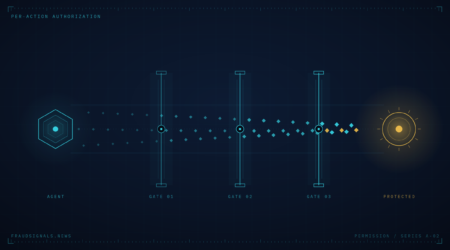
In recent years, audio deepfakes—synthetic voices generated using advanced artificial intelligence (AI) models—have evolved from experimental curiosities into potent tools with real-world implications. As banks continue to rely heavily on voice authentication systems for phone-based transactions, the emergence of convincingly cloned voices presents new security challenges. This investigation explores how deepfake technology is reshaping the threat landscape for financial institutions and what measures are being taken—or overlooked—to mitigate these risks.
The Technological Roots of Audio Deepfakes
Audio deepfakes are created using neural networks capable of mimicking a person’s vocal characteristics after processing relatively small amounts of speech data. Technologies such as text-to-speech (TTS) and voice cloning leverage architectures including generative adversarial networks (GANs) and transformer-based speech models to synthesize natural-sounding voices. The result is the ability to generate speech that matches tone, cadence, and personality traits with startling realism.
In the early stages, deepfake audio demanded large datasets and expert-level technical skills. However, commercially available tools have dramatically lowered the barrier to entry. Today, even non-specialists can create convincing fake voices using only minutes of recorded audio from social media or online interviews.
This democratization of deepfake technology amplifies both innovation and vulnerability. While legitimate research uses include accessibility and media production, malicious actors exploit these tools for fraud, impersonation, and disinformation. The growing prevalence of synthesized voices in the wild is forcing regulators and financial institutions to reconsider long-held assumptions about identity verification.
When Synthetic Voices Call the Bank
Phone-based banking systems have traditionally depended on biometric voice verification, under the assumption that each voice carries unique, hard-to-imitate features. These systems analyze acoustic markers such as pitch, frequency, and articulation patterns to authenticate callers. But with deepfake voices now capable of replicating these characteristics, fraudsters can convincingly impersonate legitimate account holders.
Documented incidents already hint at this emerging threat. In one widely reported case, an executive was duped into authorizing a large transfer after receiving a call that appeared to come from his superior’s voice—a scenario likely to replicate on a consumer scale as tools become more accessible. For banks, such incidents expose the fragility of systems once considered secure.
Complicating matters further, these attacks are challenging to detect in real time. Deepfake voices often blend seamlessly with legitimate customer interactions, bypassing traditional anti-fraud safeguards. The stakes are especially high for institutions relying on call-center-driven services where human operators must make rapid trust decisions under pressure.
Detection: The New Arms Race
As audio deepfakes grow more sophisticated, so too must detection techniques. Current research focuses on identifying subtle artifacts in synthetic speech—such as irregular frequency modulations or temporal inconsistencies—that give away AI-generated audio. Machine learning models trained on vast datasets of both genuine and fake voices are being developed to automatically flag suspicious inputs during real-time interactions.
However, this defensive strategy faces a moving target. Deepfake generation models continuously improve through adversarial training, producing voices that evade the very detectors designed to expose them. As a result, detection tools require constant updating, creating a costly and ongoing technological arms race between fraud prevention teams and adversarial actors.
In addition, even when detection succeeds technically, operational integration remains complex. Banks must balance security with customer convenience, ensuring that enhanced verification protocols do not degrade the user experience. The trade-offs between frictionless service and effective fraud prevention define the next frontier of financial cybersecurity.
Policy and Legal Countermeasures
Regulators are beginning to recognize that existing frameworks for identity fraud may not fully address deepfake-related threats. Laws such as the EU AI Act and emerging U.S. state-level bills on synthetic media transparency attempt to impose accountability on developers and users of generative models. Yet enforcement remains fragmented, and global coordination is nascent at best.
Financial regulators have also urged banks to review their biometric authentication systems in light of generative threats. Institutions are encouraged to supplement voice-based verification with multi-factor methods, including behavioral analytics and device fingerprinting. Such blended approaches can make it significantly harder for fraudsters to exploit a single compromised factor.
Still, the pace of regulatory innovation lags behind the technology itself. The development of standardized testing regimes for AI-generated audio remains an open challenge. As policy frameworks evolve, the banking sector continues to navigate uncertain terrain, balancing compliance obligations with technological adaptation.
The Path Forward for Secure Voice Authentication
To safeguard against deepfake-driven threats, experts emphasize diversification of authentication factors. Hybrid solutions combining voice patterns with contextual metadata—for example, call geolocation, historical behavior, or time-based transaction patterns—offer improved resilience. Rather than eliminating voice verification, these systems reframe it as one layer in a broader, adaptive security architecture.
Emerging anti-spoofing algorithms add another line of defense, analyzing minute variations in breath, echo, and microphone characteristics that deepfake models struggle to replicate accurately. Banks experimenting with these technologies report promising preliminary results, though scalability and accuracy remain ongoing concerns. The next era of fraud prevention will hinge on the fusion of biometrics, analytics, and dynamic learning systems capable of continuous adaptation.
Ultimately, success will depend on collaboration between financial institutions, AI researchers, and regulators. Information sharing about emerging attack vectors can help all stakeholders stay one step ahead of adversaries. As with any breakthrough in security, the solution is unlikely to be static—it will evolve in tandem with the threats it seeks to contain.
Audio deepfakes have redefined what it means to “hear” identity in an age dominated by synthetic media and automated systems. For phone-based banking, their rise transforms a once-reliable biometric factor into a contested battleground of innovation and deception. The future of voice authentication will depend not on technical isolation but on layered, multi-disciplinary strategies that merge AI detection, human judgment, and robust governance—an uneasy equilibrium between convenience and trust in the digital age.